
Araceli González
¿Te imaginas estar caminando en el bosque, sintiendo los rayos del sol pasar entre las hojas, escuchando el cantar de las aves y el crujir de las hojas bajo tus pies?
Corría el año 2014 y con tan solo 20 años, en mi primera ida al Parque Nacional Ybycuí yo tenía la misma sensación hermosa que ustedes se han imaginado. Este lugar años atrás era considerado como un balneario, las personas desconocían que se encontraban en un área silvestre protegida. Iba como voluntaria del Programa de Apoyo de Voluntarios en Áreas Protegidas (PAVAP) y fue ahí donde aprendí que yo podía contarles a las personas que el lugar era protegido y eso se convirtió en un reto: ¿cómo comunicarnos para lograr la conservación de nuestros recursos? O dicho de otra forma, ¿cómo traducimos el lenguaje naturaleza para que sea entendido por todos?
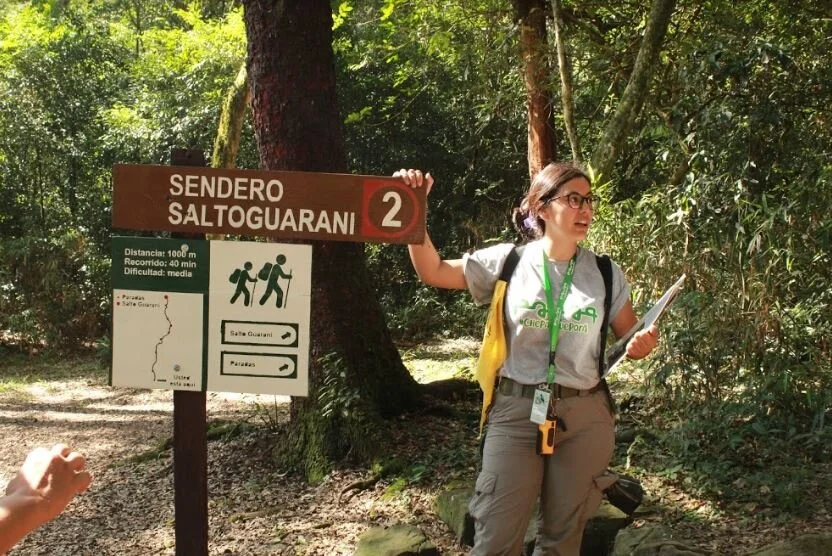
Uno de los senderos del Parque Nacional Ybycuí lleva el nombre de Guaraní, nos conduce hasta un hermoso salto de agua que tiene una caída de 16 metros de altura, cubierto a su alrededor por una densa vegetación. De solo contarlo ya se nos hace precioso, pero durante el trayecto a este atractivo comentábamos poco.
Pero no fue hasta el 2019 que tuve la oportunidad de aprender a traducir la voz del bosque a través de la Interpretación Ambiental, fui becada para realizar un diplomado en México, al volver seguí desempeñándome como Coordinadora de Comunicaciones del PAVAP, capacité a voluntarios en Educación e Interpretación ambiental y Diseñe la Interpretación del Sendero Guaraní.
A través de los años apoyando las labores del Parque desde la Organización Paraguaya de Conservación y Desarrollo Sustentable (OPADES), el comentario de un visitante se me ha quedado grabado y para mí, es un recordatorio de que vale la pena trabajar en conservación de la biodiversidad:
“Yo visito hace años el parque y no sabía que todo esto existía aquí”.
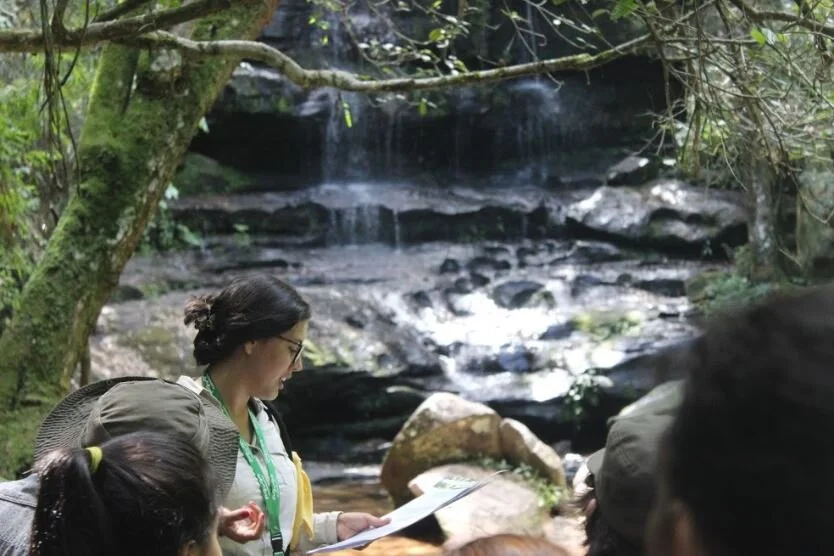
Aunque dedicar esfuerzos a interpretar no sea una prioridad en conservación, todo lo que genera en una persona la visita a un área protegida compensa y llena los corazones de todos y todas las personas que pasamos largas jornadas en el campo, asegurando un aliado más para proteger y conservar, nuestro presente y el de las generaciones futuras.
Nuestro Parque guarda una rica historia cultural, el área protege la primera fundidora de Hierro de Latinoamérica, lugar que fue devastado durante la Guerra de la Triple Alianza. Se cree que estos senderos eran recorridos primero por nuestros antepasados: los guaraníes, quienes nos legaron los diferentes usos de las plantas. Y posteriormente por los obreros de la fundidora.
Este sendero recorrido por muchísimas personas anualmente, es el mismo que guarda la bravura de la sangre guaraní y no solo nos lleva al salto de agua tan querido en épocas calurosas, sino también nos lleva a nuestra historia.
Transitando por nuestra historia aprendemos sobre especies de flora que para los guaraníes presentan un uso medicinal o maderero. Cada parada está escrita en nuestra dulce lengua guaraní: idioma oficial de la República del Paraguay.
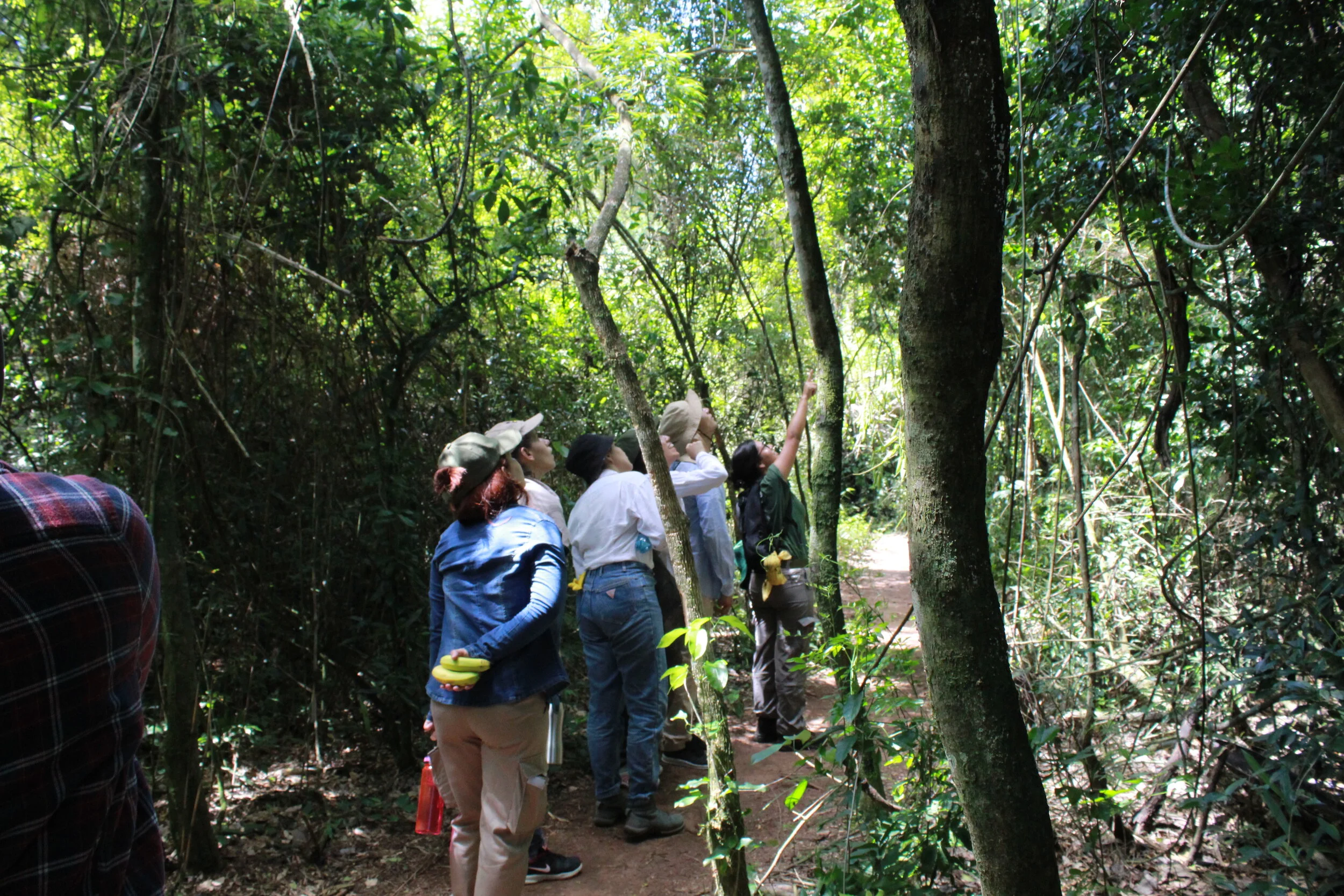
La voz del bosque nos intenta hablar de diferentes formas, ella nos cuenta una historia, la de nuestros antepasados, la de las aves, la de los hongos, la de las perfectas conexiones que crea la misma naturaleza. Saber escucharla es darle importancia a lo simple, a lo que normalmente no vemos, es honrar nuestra cultura. Y traducirla es una responsabilidad que tenemos para con nuestra generación, pero por sobre todo con las futuras.
Can you imagine walking in the forest, feeling the rays of sun pass between the leaves, listening to the singing of the birds and the rustling of the leaves under your feet?
It was 2014 and when I was only 20 years old, on my first trip to Ybycuí National Park I had the same beautiful feeling that you have imagined. This place years ago was considered a spa, people were unaware that they were in a protected wilderness area. I was a volunteer for the Voluntary Support Program in Protected Areas (PAVAP) and it was there that I learned that I could tell people that the place was protected and that became a challenge: how to communicate to achieve the conservation of our resources ? Or put another way, how do we translate the language of nature so that it is understood by everyone?
One of the trails in the Ybycuí National Park is named after Guaraní, it leads us to a beautiful waterfall that has a 16-meter drop, covered by dense vegetation.
But it was not until 2019 that I had the opportunity to learn to translate the voice of the forest through Environmental Interpretation, I was awarded a scholarship to do a diploma in Mexico, when I returned I continued to work as Communications Coordinator of PAVAP, I trained volunteers in Education and Environmental Interpretation and Design the Interpretation of the Guaraní Trail.
Through the years supporting the work of the Park from the Paraguayan Organization for Conservation and Sustainable Development (OPADES), a visitor's comment has stuck with me and for me, it is a reminder that it is worth working on conservation of the biodiversity:
"I visited the park years ago and did not know that all this existed here."
Although dedicating efforts to interpreting is not a conservation priority, everything a visit to a protected area generates in a person compensates and fills the hearts of each and every person who spends long days in the field, ensuring one more ally to protect and preserve our present and that of future generations.
Our Park has a rich cultural history, the area protects the first iron foundry in Latin America, a place that was devastated during the War of the Triple Alliance. It is believed that these trails were first traveled by our ancestors: the Guarani, who bequeathed us the different uses of the plants. And later by the workers of the foundry.
This trail traveled by many people annually, is the same one that keeps the bravery of the Guaraní blood and not only takes us to the waterfall that is so loved in hot times, but also takes us to our history.
Going through our history we learn about species of flora that for the Guaraní present a medicinal or lumber use. Each stop is written in our sweet Guaraní language: the official language of the Republic of Paraguay.
The voice of the forest tries to speak to us in different ways, it tells us a story, that of our ancestors, that of birds, that of fungi, that of the perfect connections that nature itself creates. To know how to listen to it is to give importance to the simple, to what we don't normally see, is to honor our culture. And translating it is a responsibility we have towards our generation, but above all with future ones.