
Fernanda Pérez Alarcón
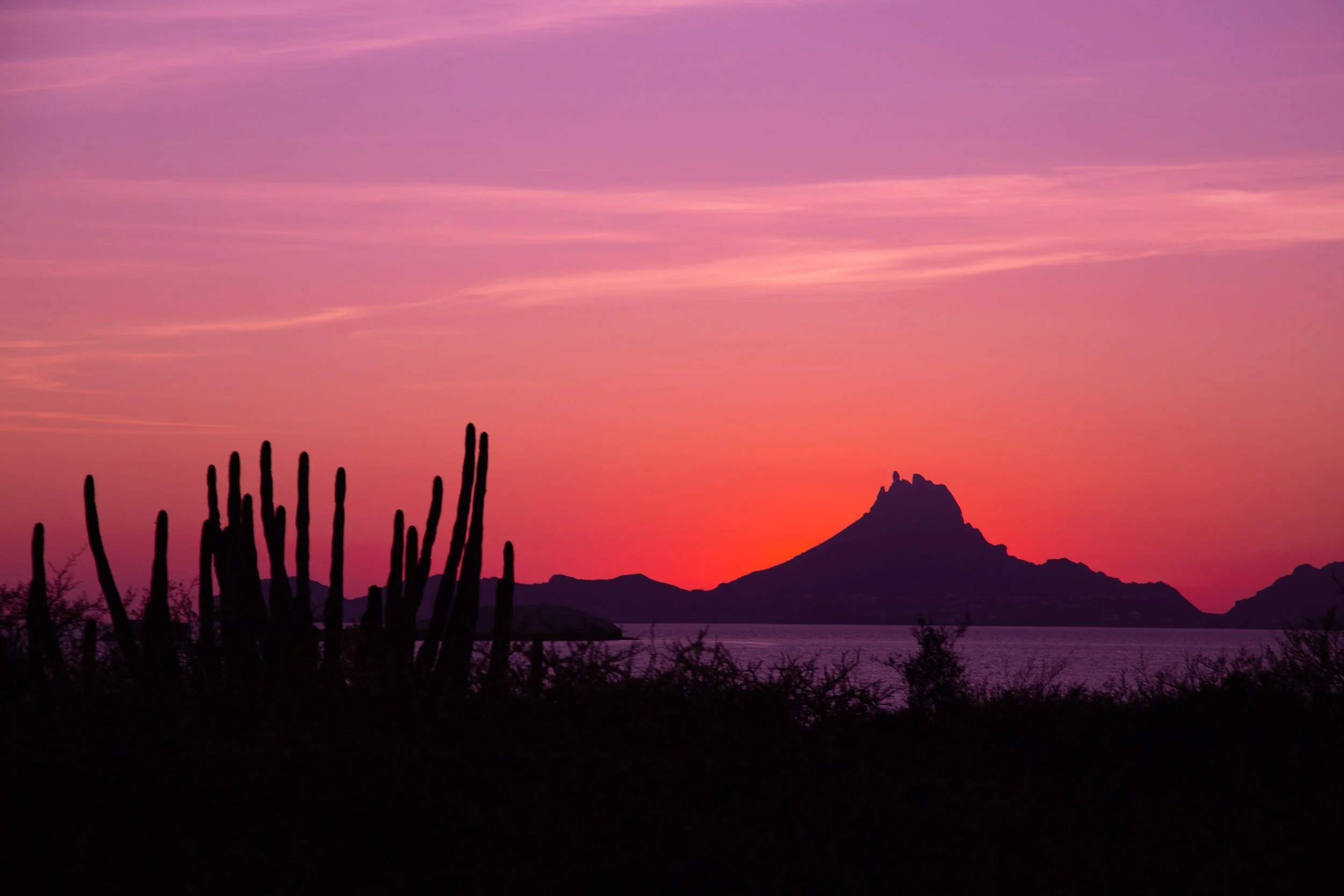
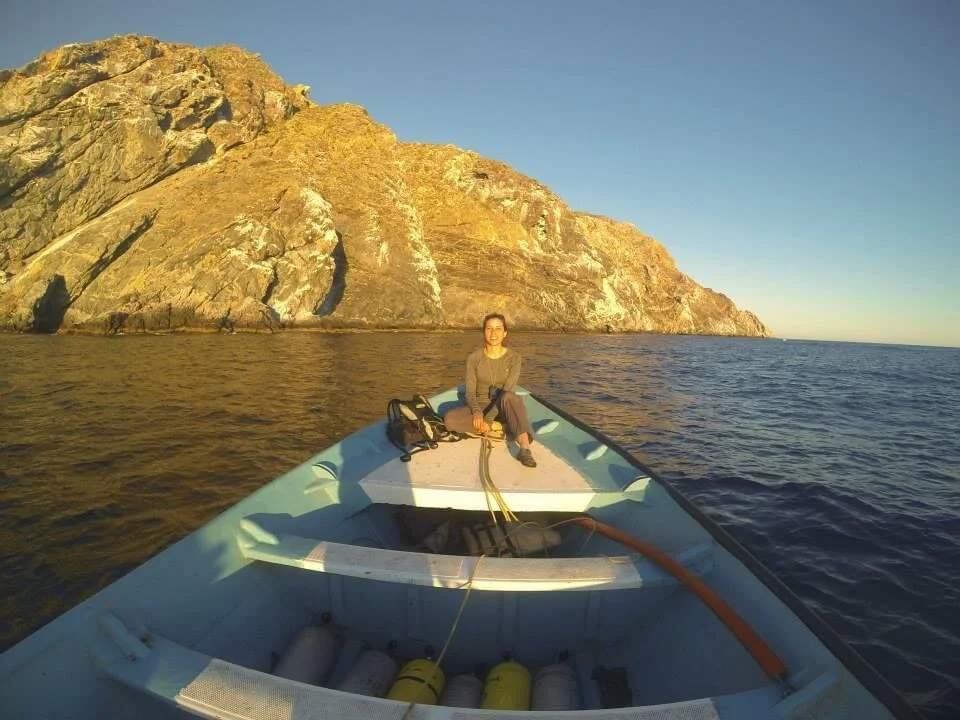
En 2017 trabajaba como jefe de proyecto en Comunidad y Biodiversidad, A.C. (una organización mejor conocida como COBI). En ese entonces, yo coordinaba una campaña de comunicación para dar a conocer el establecimiento zonas de refugio pesquero (áreas de no pesca) en Isla San Pedro Nolasco (ISPN de ahora en adelante) propuestas por un comité de pescadores de Guaymas, Sonora (México). La ISPN es una isla del Golfo de California, ubicada a 25 km del continente, particularmente del Campo Pesquero La Manga (qué es parte de Guaymas). La isla es un importante sitio pesquero y turístico, que además es hogar de una colonia de 700 lobos marinos de California y es parte del corredor de una gran diversidad de fauna marina.
La Manga es una comunidad muy aislada y bastante marginada de Guaymas, que se estableció en la década de los 70s. Para darnos una idea, tiene como 150 habitantes, no hay luz eléctrica ni acceso a agua potable, entre otras necesidades que, los citadinos, consideramos elementales para una vida confortable y digna. Esta comunidad depende en gran medida de lo que pescan en el día a día, ya sea para comercializar o para consumo en el hogar (cabe mencionar que son de los principales usuarios de la ISPN). En repetidas ocasiones atravesé el poblado de La Manga sin saber que, en ella, vivía un grupo de mujeres pescadoras con un antecedente tan inspirador.
En el verano de 2017, me acerqué al “Área de Protección de Flora y Fauna Islas del Golfo de California” de la CONANP en Guaymas, buscando apoyo para poder comunicar lo de las zonas de refugio pesquero en La Manga. Jesús Zatarain (Director del Área) y Germán Barrera (de CONANP) me sugirieron apoyarme de “las promotoras comunitarias de educación ambiental” de La Manga, con las que la CONANP trabaja desde hace varios años. Desde 2002, este grupo de diez mujeres (entre los 25 y los 60 años) han sido capacitadas en varios temas sobre conservación y manejo de áreas naturales protegidas, cambio climático, protección y monitoreo de fauna silvestre, manejo de desechos, prestación de servicios turísticos, entre otras. Su labor principal ha sido la educación ambiental dirigida a niños y jóvenes. Su trabajo a nivel regional era a veces interrumpido, pues éste depende en su totalidad de fondos federales, que, como sabrán, no son estables pues están sujetos a cambios de áreas geográficas, prioridades nacionales y otras cuestiones. Sin embargo, siempre buscaron seguir esparciendo el mensaje de la conservación entre los más pequeños de su comunidad.
Al momento yo desconocía por completo sobre este grupo de promotoras, y tras escuchar sobre su historia, me pegué a Germán para conocerlas personalmente. Desde un principio percibí mucho interés de ellas por el proyecto de ISPN ya que tenían algo de tiempo más enfocadas en el monitoreo de fauna silvestre y habían tenido que dejar de lado la educación ambiental. En un principio, la CONANP me invitó a monitoreos de lobo marino y aves en ISPN con el grupo de mujeres para que les platicara sobre las zonas de refugio. Recuerdo con gusto verlas subir y bajar por una de las laderas de la isla, y cómo no se limitaban en campo por edad, condición, estereotipos, ni nada de eso. Desde ese momento, sentí gran admiración por ellas.
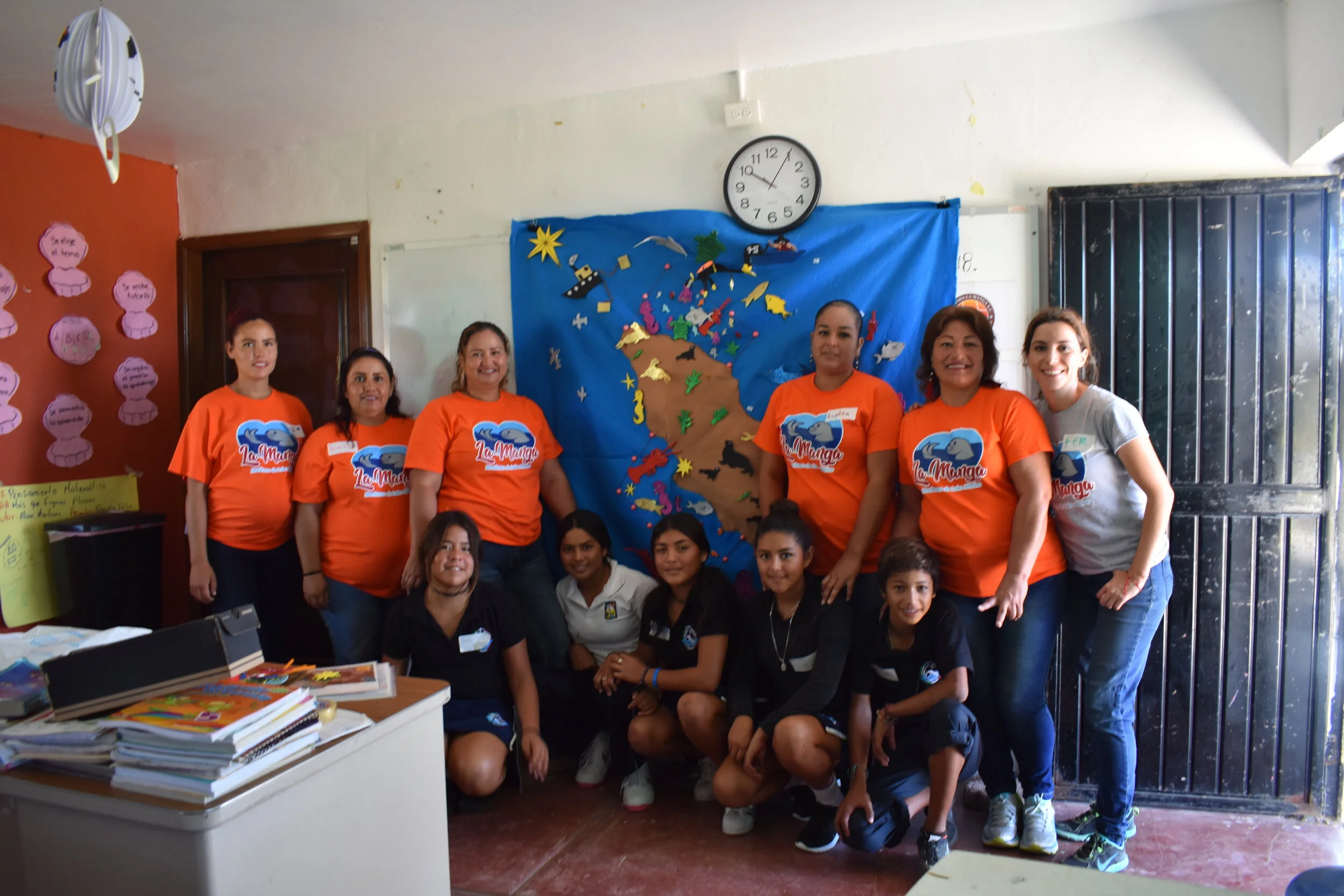
Durante tres meses, trabajamos juntas de la mano para diseñar un taller sobre “pesca responsable” y “áreas de no pesca” dirigido a niños y jóvenes de la comunidad (los futuros pescadores). Siendo muy sincera, era la primera vez que coordinaba una campaña de comunicación. Había estado apoyándome con otros grupos y comités para implementarla (aunque al fin de cuentas, yo era la que empujaba y continuamente me sentía abrumada), pero con ellas todo era muy distinto. Ellas se apropiaron de la campaña en La Manga y hacían que todo caminara. “No te preocupes Fer, nosotras vamos a sacar esto contigo”, me decían las chicas. Un día llegué a verlas a casa de Doña Berta, y ya se habían reunido todas para convertir el metro de tela azul y café, y las cartulinas de colores, en una maqueta tridimensional de la ISPN (rellena de algodón como cojín) con siluetas de peces, aves, tortugas, ballenas y lobos marinos adornados con diamantina, para usarla en su presentación. Quiero que vean a Amada, Esmeralda y Dulce explicar el funcionamiento de las zonas de refugio pesquero a niños de primaria.
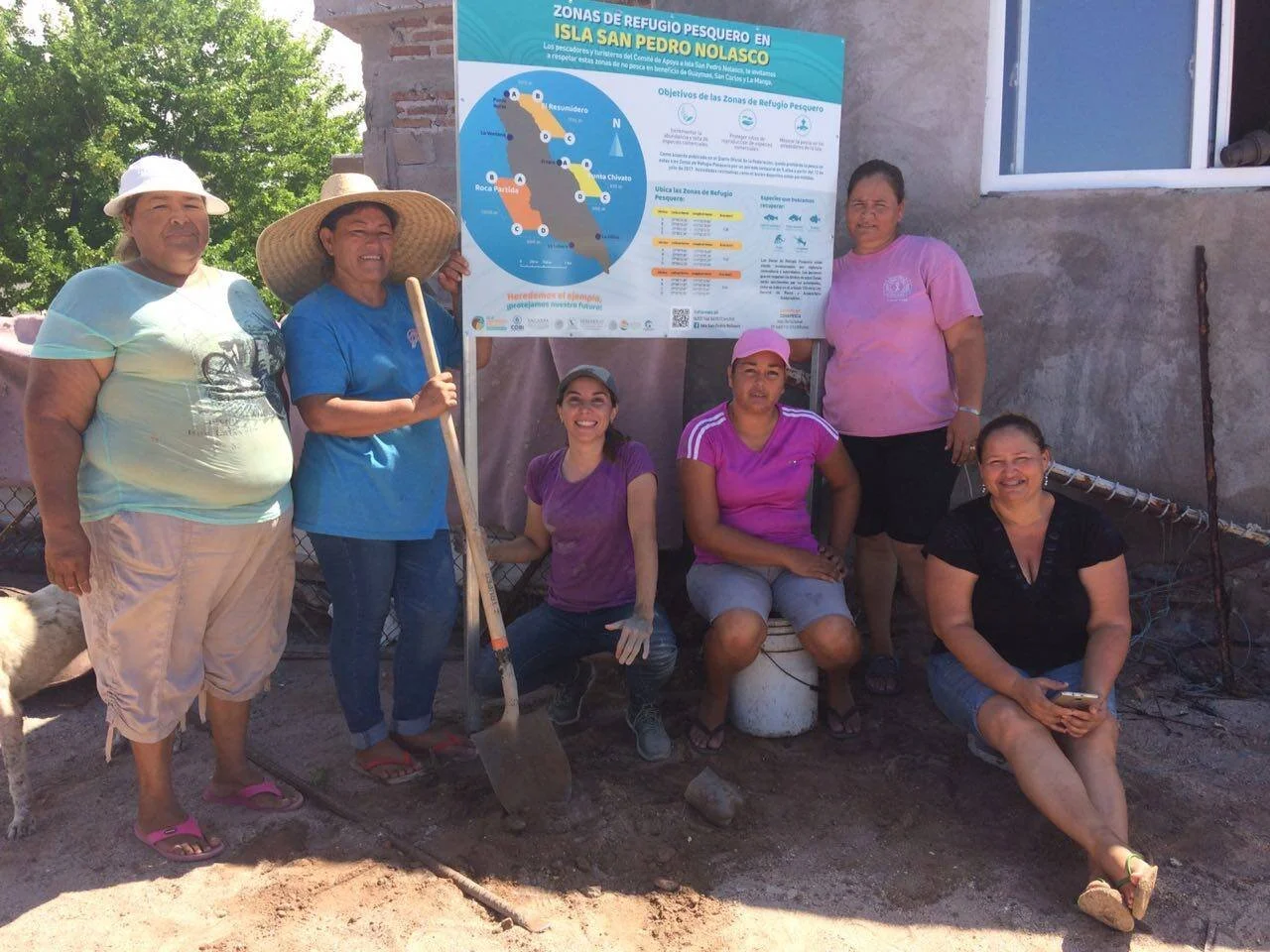
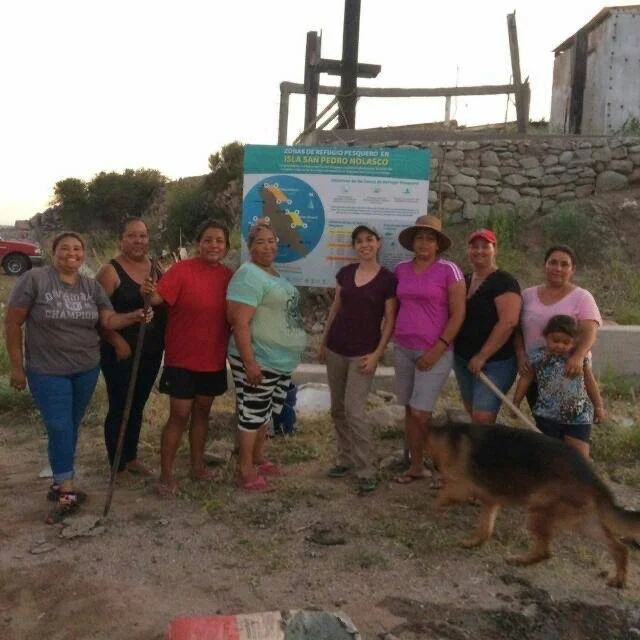
En otra ocasión había quedado con unos pescadores para instalar un par de letreros de lámina de 1.80 x 1.20 metros en La Manga, que debían ser enterrados y fijados con cemento. Al modo, me quedaron mal. Ya iba yo a salir del pueblo, cuando me detiene un grito: “¡Miren chamacas! ¡Ahí va la Fernanda!”. Les platiqué de mi intento fallido con los pescadores. “No te preocupes, ¡ahorita la hacemos entre todas!” me dijo la Yadira. Salen las diez mujeres, incluyendo a la Rosy y la Chely (ambas embarazadas), caminando hacia el muelle con palas, picos, cubetas con arena y grava. Sin dudarla, unas bajaron de la camioneta los pesados letreros de aluminio, mientras otras mezclaban el cemento y otras hacían los hoyos. En 30 minutos quedó resuelto el asunto de los dos letreros. Su compromiso y automotivación, me mantenían motivada en medio de momentos de estrés e incertidumbre.
Después de tres meses de colaboración y reuniones semanales de trabajo, logramos entre todas y la CONANP diseñar los talleres de “pesca responsable” y “áreas de no pesca” para primaria y secundaria, además de pintar un mural de 6 x 3 metros con los niños y jóvenes de la comunidad de la Manga. Platicando con algunas de ellas, me comentaban que la expectativa de vida ahí era casarse muy jóvenes, tener hijos, ser amas de casa, y además de atender labores de pesca en las que participan para tener ingresos extra (pesca y limpieza de pescados y mariscos). Una de ellas era bisabuela a los 56 y otra de las chicas era abuela a los 30. Este proyecto de ser “promotoras de educación ambiental” y además “monitoras de fauna silvestre” les había abierto el panorama y cambiado su mentalidad, de que ellas tienen la capacidad de superarse y hacer algo más grande que aquella expectativa de cierta manera “impuesta” en ellas por su entorno social. A la fecha siguen capacitándose e involucrándose en más proyectos de conservación marina con CONANP.
Lo que busco resaltar aquí es que en donde menos te lo esperes, en la comunidad o colonia más remota y marginada, existen personas con toda la capacidad y ganas para superarse, cambiar su vida y la de los demás, y dejar un mejor mundo para los que vienen. Creo que este es uno de los impactos con mayor valor y significancia de aquellos que trabajamos con comunidades. ¡Sigamos apoyando los proyectos de grupos comunitarios!
Quiero agradecer a COBI por permitirme coordinar este proyecto y campaña de comunicación, al personal del Área de Protección de Flora y Fauna “Islas del Golfo de California” particularmente a Germán Barrera. Un especial agradecimiento a Yadira, Amada, Esmeralda, Berta, Brenda, Rosita, Aracely (Chely) y Elizabeth por todo su apoyo en este proyecto. ¡Las admiro mucho!
In 2017 I worked as a project manager at Comunidad y Biodiversidad, A.C. (an organization better known as COBI). At that time, I was coordinating a communication campaign to publicize the establishment of non-fishing areas on San Pedro Nolasco Island (ISPN from now on) proposed by a committee of fishermen from Guaymas, Sonora (Mexico ). The ISPN is an island in the Gulf of California, located 25 km from the mainland, particularly the La Manga Fishing Field (which is part of Guaymas). The island is an important fishing and tourist site, which is also home to a colony of 700 California sea lions and is part of the corridor of a great diversity of marine fauna.
La Manga is a very isolated and quite marginalized community in Guaymas, which was established in the 1970s. To give us an idea, it has about 150 inhabitants, there is no electricity or access to running water, among other needs that we, city dwellers, consider essential for a comfortable and dignified life. This community largely depends on what they fish on a day-to-day basis, either for marketing or for home consumption (it is worth mentioning that they are among the main users of the ISPN). On several occasions I crossed the town of La Manga without knowing that, in it, lived a group of women fishermen with an inspiring background.
In the summer of 2017, I approached the “Area for the Protection of Flora and Fauna Islands of the Gulf of California” of CONANP in Guaymas, seeking support to be able to communicate about the non-fishing zones in La Manga. Jesús Zatarain (Director of the Area) and Germán Barrera (of CONANP) suggested that I seek support from “the community promoters of environmental education” of La Manga, with whom CONANP has been working for several years. Since 2002, this group of ten women (between 25 and 60 years old) have been trained in various topics on conservation and management of protected natural areas, climate change, protection and monitoring of wildlife, waste management, provision of tourism services , among others. Their main work has been environmental education aimed at children and young people. Their work at the regional level was sometimes interrupted, since it depends entirely on federal funds, which, as you know, are not stable because they are subject to changes in geographic areas, national priorities and other issues. However, they always sought to continue spreading the message of conservation among the youngest of their community.
At the time I was completely unaware of this group of promoters, and after hearing about their history, I got close to Germán to get to know them personally. From the beginning I perceived a lot of interest from them in the ISPN project since they had been more focused on wildlife monitoring for some time and had had to put environmental education aside. At first, CONANP invited me to monitor sea lions and birds at ISPN with the group of women to talk to them about the refuge areas. I remember with pleasure seeing them go up and down one of the island's slopes, and how they were not limited in the field by age, condition, stereotypes, or anything like that. From that moment on, I felt great admiration for them.
For three months, we worked together hand in hand to design a workshop on “responsible fishing” and “no fishing areas” aimed at children and young people from the community (the future fishermen). To be very honest, it was the first time that I coordinated a communication campaign. I had been supporting myself with other groups and committees to implement it (although in the end, I was the one pushing and I was continually overwhelmed), but with them everything was very different. They took over the campaign in La Manga and made everything walk. "Don't worry, Fer, we're going to make this happen together," the girls would tell me. One day I got to see them at Doña Berta's house, and they had already gathered to turn the meter of blue and brown fabric, and the colored cards, into a three-dimensional model of the ISPN (filled with cotton as a cushion) with silhouettes of fish, birds, turtles, whales and sea lions adorned with diamond, to use in your presentation. I want you to see Amada, Esmeralda and Dulce explain the operation of the fishing refuge areas to primary school children.
On another occasion I had arranged to meet some fishermen to install a pair of 1.80 x 1.20 meter sheet signs in La Manga, which had to be buried and fixed with cement. The men never made it. I was about to leave town, when I was stopped by a shout: “Look,girls! There goes the Fernanda! ”. I told them about my failed attempt with the fishermen. "Don't worry, we’ll do it together righ now!" Yadira told me. The ten women come out, including Rosy and Chely (both pregnant), walking towards the dock with shovels, pickaxes, buckets of sand and gravel. Without hesitation, some lowered the heavy aluminum signs from the truck, while others mixed the cement and others dug the holes. In 30 minutes the issue of the two signs was resolved. Their commitment and self-motivation kept me motivated in the midst of times of stress and uncertainty.
After three months of collaboration and weekly work meetings, together we and CONANP were able to design the workshops for "responsible fishing" and "non-fishing areas" for primary and secondary schools, in addition to painting a 6 x 3 meter mural with the children and young people of the community of La Manga. Talking with some of them, they told me that the expectancy there was to marry very young, have children, be housewives, in addition to attending fishing tasks in which they participate to have extra income (fishing and cleaning fish and shellfish ). One of them was a great-grandmother at 56 and another of the girls was a grandmother at 30. This project of being "promoters of environmental education" and also "wildlife monitors" had opened up the panorama and changed their mentality, that they have the ability to surpass themselves and do something greater than that expectation in a certain way "imposed" on them by their social environment. To date, they continue to train and get involved in more marine conservation projects with CONANP.
What I want to highlight here is that where you least expect it, in the most remote and marginalized community or neighborhood, there are people with all the ability and desire to improve themselves, change their life and that of others, and leave a better world for those who come. I think this is one of the impacts with the greatest value and significance of those of us who work with communities. Let's continue supporting community group projects!
I want to thank COBI for allowing me to coordinate this project and communication campaign, the personnel of the Flora and Fauna Protection Area "Islands of the Gulf of California", particularly Germán Barrera. A special thanks to Yadira, Amada, Esmeralda, Berta, Brenda, Rosita, Aracely (Chely) and Elizabeth for all their support in this project. I admire them so much!