
Karla Botello
La primera vez que me impresionó bastante el océano, fue cuando mi familia y yo fuimos a hacer snorkel a una playa llamada El Himalaya en las costas de Sonora, México. Yo estaba en la primaria, y quede totalmente fascinada de toda la vida marina que había en ese entonces, tanto que pensaba que los peces iban a chocar conmigo cuando nadaba. Desde ese momento quedé impactada de las bellezas que nos ofrece el Mar de Cortés. Lo que me llevó a estudiar una carrera en biología y hacer una maestría en manejo de recursos marinos.
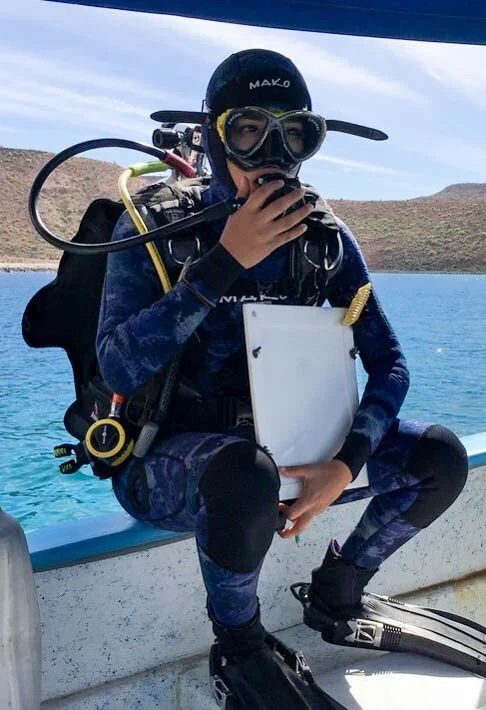
A lo largo de mi vida académica y profesional, la mayoría de mis salidas de campo han sido en el mar. Son salidas de buceo, para hacer monitoreos, restauración coralina y obtener DNA ambiental entre otros proyectos de investigación. Y lo encuentro bastante emocionante, es la parte más divertida del trabajo. Desde el preparar la salida y asegurarte que no se olvide ningún utensilio, como el dar ese brinco al agua, y sumergirme en ese ambiente totalmente distinto al nuestro.
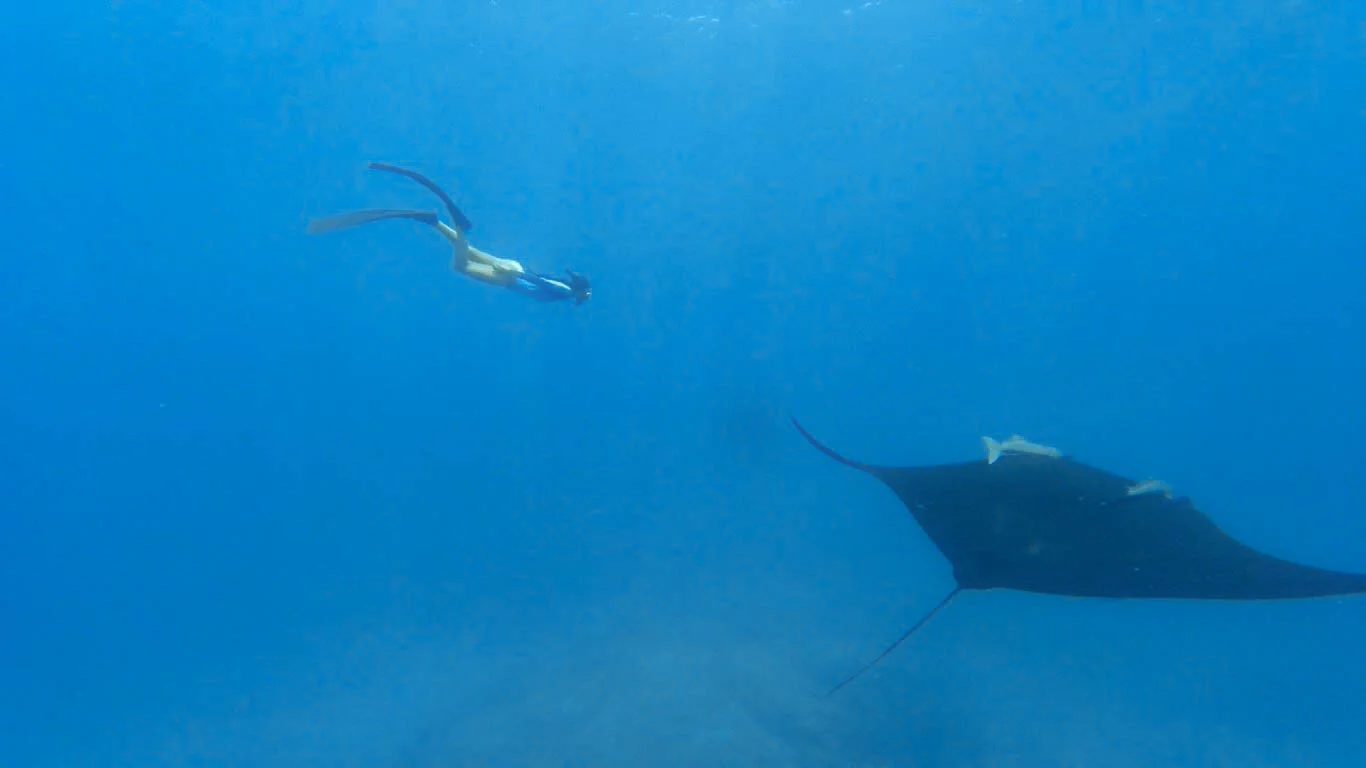
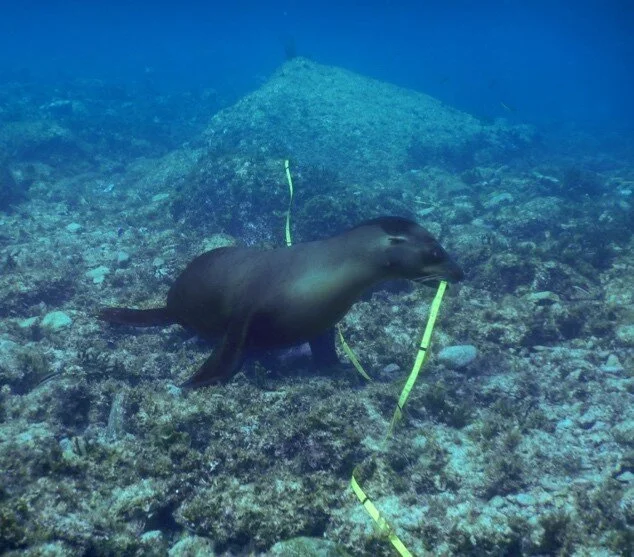
Cuando estoy bajo el agua y respiro, siento una mezcla de emociones entre felicidad, nervios, curiosidad y diversión de no saber qué es lo que nos espera en ese buceo. Mientras trabajo bajo el agua, puedo observar formaciones de distintos tamaños de peces impresionantes, también me ha tocado estar muy concentrada trabajando y que un lobo marino me esté jalando mi transecto para que juegue con él. Por un momento admiro las formas bastante caprichosas de corales y esponjas que forman el hábitat de distintos organismos. De repente observo sombras, volteo y son aves zambulléndose bajo el agua para pescar su alimento. Es muy emocionante el poder presenciar esos momentos.
Una de las cosas que más me impresiona, es como en 1 m² de roca puede existir una gran cantidad de vida marina. Un ejemplo son los nudibranquios, que son pequeños invertebrados que presentan una combinación de colores totalmente impactantes y contrastantes, estos colores son utilizados como método de defensa contra sus depredadores. También se encuentran los peces crípticos, que son peces muy pequeñitos, generalmente menores a 5 cm. Estos peces suelen tener formas bastante alocadas, aparentando ser pequeños dragoncitos que en muchas ocasiones pasan totalmente desapercibido al ojo humano. Observo una explosión de vida, colores, y de miles de organismos rodeándome. Es algo totalmente fascinante.
Sin embargo, no siempre nos tocan las condiciones ideales para trabajar en campo. En numerosas ocasiones nos ha tocado enfrentarnos a diversos retos ambientales. Tales como oleaje, corrientes fuertes y visibilidad prácticamente nula. Esto ocasiona que a pesar que caigamos en el sitio de buceo correcto, la corriente nos traslada a otro sito totalmente diferente y nuestro consumo de aire aumente, por lo que tenemos menos tiempo de aire bajo el agua. Esto dificulta bastante el trabajo y obstruye la obtención de mejores datos.
Los riesgos de que ocurra algún accidente también aumentan. En ocasiones hemos decidido suspender buceos, ya que la seguridad siempre esta en primer lugar. Lo cual no es fácil de decidir, debido a que cada buceo requiere de bastante financiamiento y una cuantiosa planificación. Si cancelamos un buceo en campo, es muy probable que no se pueda repetir y tengamos que modificar y adaptarnos a ciertos datos, que no son los que hayamos deseado.
Me ha tocado bucear tanto en sitos cercanos, como en lugares remotos, y siempre siento esa inmensidad y fuerza que el océano nos ofrece. Es algo que me atrae de él, a querer seguir explorando e investigando sus misterios. A querer protegerlo, conservarlo y mostrar las bellezas que nos ofrece.
The first time the ocean impressed me was when my family and I went snorkeling to a beach called El Himalaya on the coasts of Sonora, Mexico. I was in elementary school, and I was totally fascinated by all the marine life back then. So much so that I thought that the fish would crash into me when I swam. From that moment, I was shocked by the beauties that the Sea of Cortés offers us. Which led me to study a career in biology and earn a master's degree in marine resource management.
Throughout my academic and professional life, most of my field trips have been at sea. They are diving trips, for monitoring, coral restoration and obtaining environmental DNA among other research projects. And I find it quite exciting, it's the most fun part of the job. From preparing the departure and making sure that you don't forget any equipment, to jumping in the water and immersing myself in that totally different environment from ours.
When I am underwater and I breathe, I feel a mixture of emotions between happiness, nerves, curiosity and fun of not knowing what is waiting for us in that dive. While working underwater, I can see formations of different sizes of impressive fish. I was once very focused working and noticed a sea lion pulling my transect, inviting me to play with it. For a moment I admire the rather whimsical forms of corals and sponges that make up the habitat of different organisms. Suddenly I see shadows, turn around and see birds diving underwater to catch their food. It is very exciting to be able to witness those moments.
One of the things that impresses me the most, is how in 1 m² of rock there can be a large amount of marine life. An example is the nudibranchs, which are small invertebrates that present a combination of totally striking and contrasting colors. These colors are used as a method of defense against their predators. Cryptic fish are also found, which are very small fish, generally less than 5 cm. These fish usually have quite crazy shapes, appearing to be small dragons that often go completely unnoticed by the human eye. I observe an explosion of life, colors, and thousands of organisms surrounding me. It is totally fascinating.
However, we do not always have the ideal conditions to work in the field. On numerous occasions we have had to face various environmental challenges., like waves, strong currents, and practically no visibility. Even though we fall into the correct dive site, the current transports us to a totally different site and our air consumption increases, so we have less underwater time. This makes the work quite difficult and obstructing the collection of good data.
The risks of an accident occurring also increase, and sometimes we decide to suspend dives since safety always comes first. Which is not an easy decision to make, since each dive requires a lot of financing and a lot of planning. If we cancel a field dive, it is very likely that it will not be repeated and we will have to modify and adapt to certain data, which is not what we want.
I have had the opportunity to dive in both nearby places and in remote places, and I always feel that immensity and strength that the ocean offers us. There is something that attracts me it, to want to continue exploring and investigating its mysteries. To want to protect it, preserve it and show the beauties it offers us.