
Mónica Alba Murillo
Cierro los ojos y aparece en mi mente un cuarto alfombrado, con una ventana al fondo, cortina violeta y una cama pegada a la pared. Me gusta estar aquí. Al centro de la habitación, puedo verme yo a los seis años, sentando a mis muñecos de peluche en el suelo, de forma circular; hay un pequeño pizarrón negro al medio y gises blancos listos para usar. Ya todos acomodados y atentos, me siento con ellos, sostengo el pizarrón, tomo un gis y les platico sobre lo que aprendí hoy en el colegio.
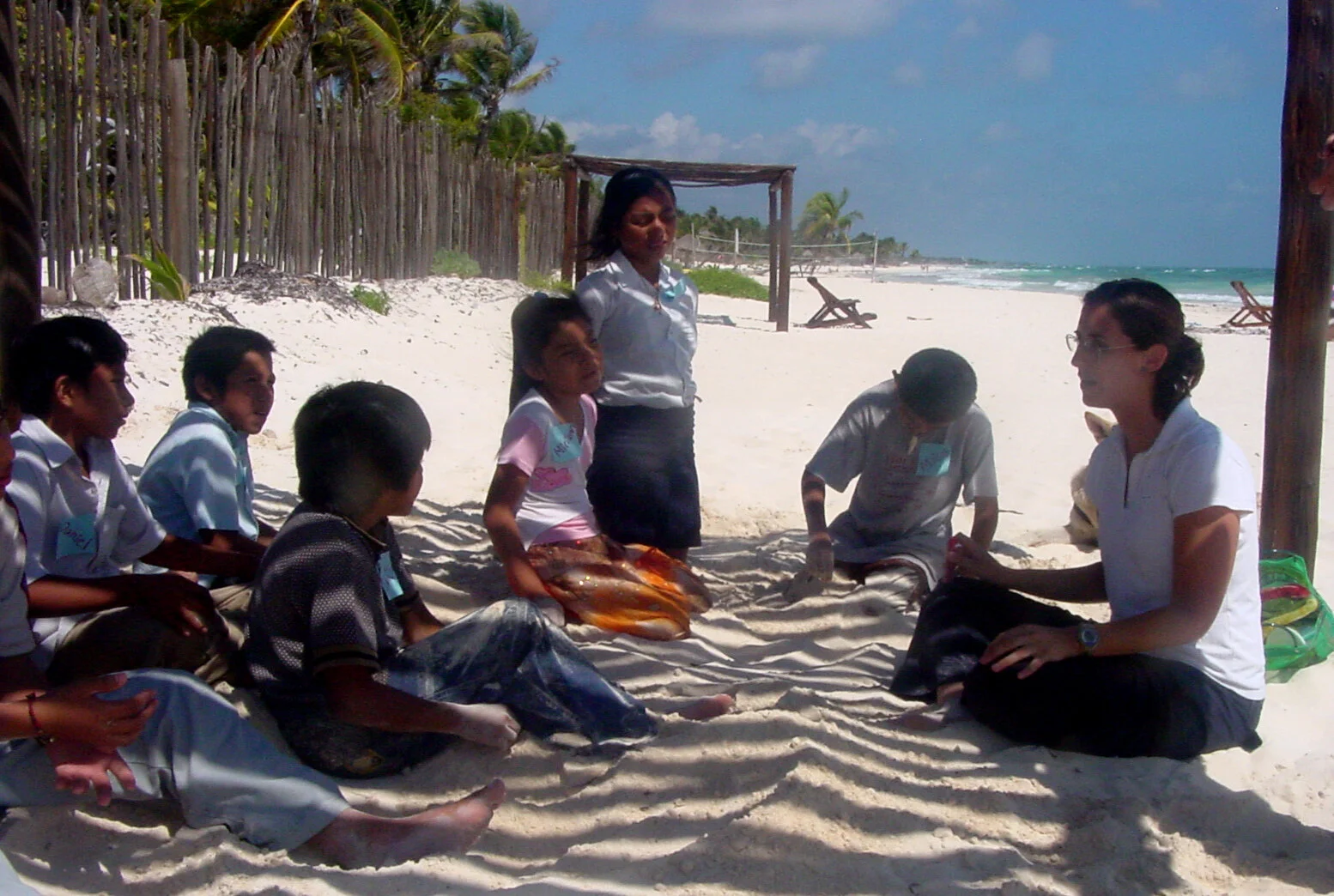
Abro los ojos y veo una fotografía tomada 20 años después, que curiosamente se parece a la escena de aquellos tiempos. Sentada en la arena, el mar Caribe de fondo y alrededor mío, niñas y niños de comunidades mayas que nunca antes habían visitado la playa y el mar. En mi mano, sostengo un títere y les comparto una historia sobre el océano, sus habitantes y por qué su vida en la selva también está conectada con el bienestar de este ecosistema. Recuerdo muy bien ese día, lleno de preguntas, curiosidad y caritas de asombro de los niños.
Estudié Biología porque me declaro una admiradora del fenómeno llamado VIDA, en todas sus manifestaciones. Desde los pequeños microorganismos que están perfectamente diseñados para sobrevivir, hasta la majestuosa ballena azul que emite cantos submarinos detectables a más de 700 kilómetros – que es la distancia, en línea recta, de la Ciudad de México a Monterrey - ¡increíble!
Aprender de la naturaleza y admirar la vida, me ha permitido entender que la evolución se ha abierto camino de las formas más creativas que pudiéramos imaginar, que cada forma de vida tiene una función específica y necesaria y que los humanos somos parte de esta red compleja de conexiones de la cual dependemos y debemos respetar. Fue así como me di cuenta que elegir el camino de la educación ambiental, como especialidad, sería una forma de poder combinar mi gusto por la naturaleza, con mi vocación por compartir lo que me apasiona. Pero, jamás imaginé el alcance, el poder, los retos y la responsabilidad que tendría elegir ese camino.
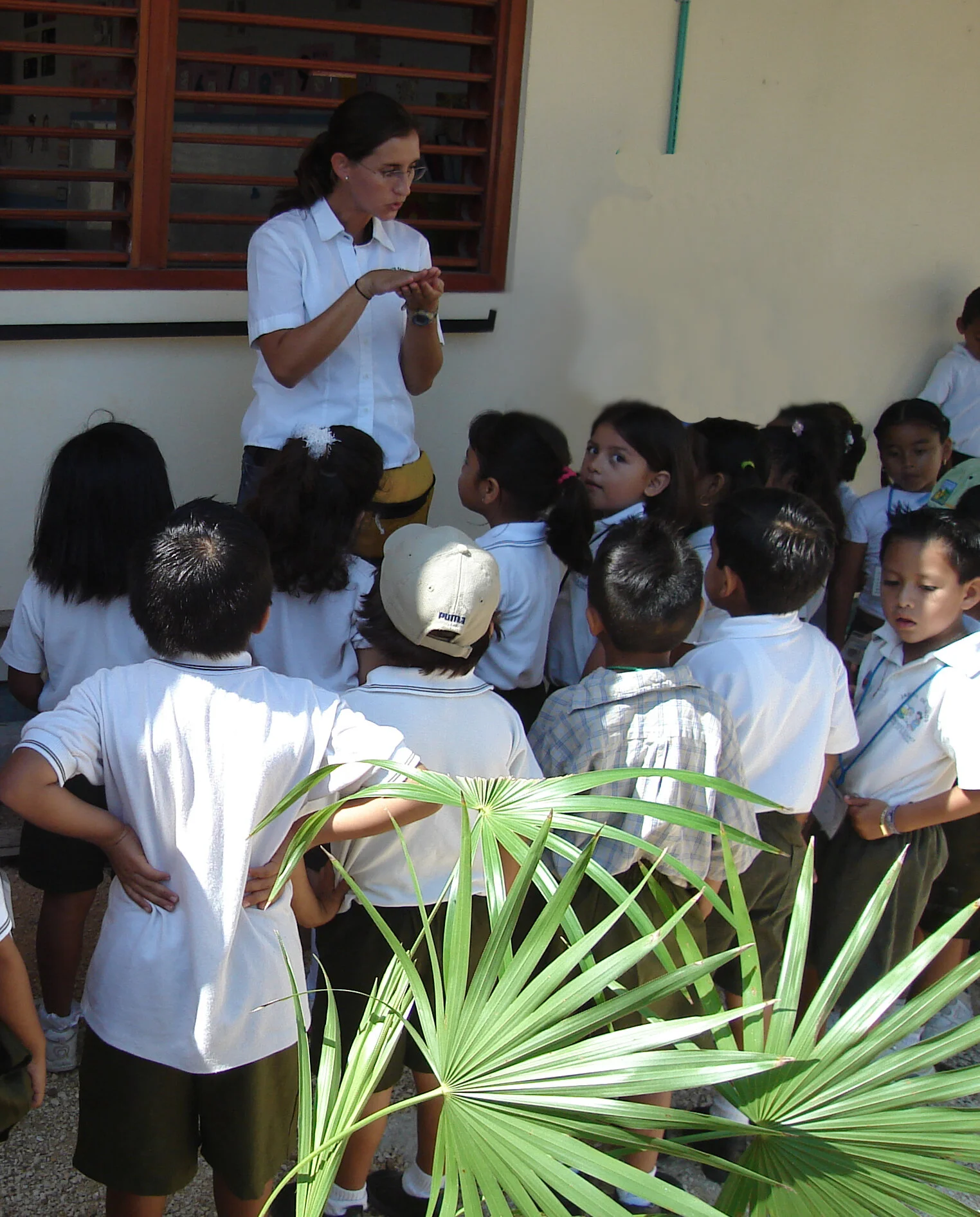
Hoy día, la educación ambiental tiene una trayectoria de más de 50 años, que ha recibido aportes de cientos de conservacionistas, educadores, académicos, gobernantes, psicólogos, sociólogos, religiosos, abogados y líderes comunitarios. La gran constante en tal variedad de caminos trazados durante estos años es que, se reconoce a la educación como la herramienta más poderosa para dirigir nuestra forma de pensar y nuestro actuar hacia una responsabilidad compartida sobre el cuidado y aprovechamiento de nuestro mundo natural. Entonces, los que hacemos educación ambiental tenemos una misión común: transformar y guiar a nuestros grupos de trabajo hacia una sociedad más respetuosa y empática por todas las formas de vida con las que coexistimos – incluyendo las comunidades humanas. Por esto, se dice que la educación ambiental es una herramienta de transformación social, ¡menudo reto!
La curiosidad y la creatividad son dos aliados muy importantes en este camino. Ambas provienen de impulsos casi primitivos y silvestres de nuestra condición humana. La curiosidad y la creatividad nos conectan con nuestras sensaciones y emociones de una forma directa, lo cual nos lleva a tener pensamientos que, a su vez, elaboran conocimientos. De esta forma, vamos construyendo nuestra realidad. Como educadores ambientales, debemos despertar la curiosidad y la creatividad en todos los grupos con los que trabajamos, como un medio de conexión personal, única y significativa con los contenidos que queremos impartir (sea el tema que sea).
Me he topado con dos concepciones erróneas sobre el quehacer de la educación ambiental. En primer lugar, se piensa que puede ser un apéndice removible de nuestros proyectos de conservación, es decir, algo que se puede retirar en caso de que sea necesario – cuando falta personal, fondos o se recortan los tiempos de un proyecto. Esto sucede porque no comprendemos su importancia como eje rector de la transformación social y llegamos a encasillarla como una serie de actividades que pudieran tener un alto impacto visual, pero de poca profundidad. Me refiero a actividades como limpiezas de playa, talleres de manualidades, siembra de árboles, etc., actividades que son necesarias y valiosas, pero que, al llevarse a cabo de forma aislada, no detonan un verdadero cambio de conciencia, desarrollo de habilidades y valores que puede brindar un proceso continuo de formación.
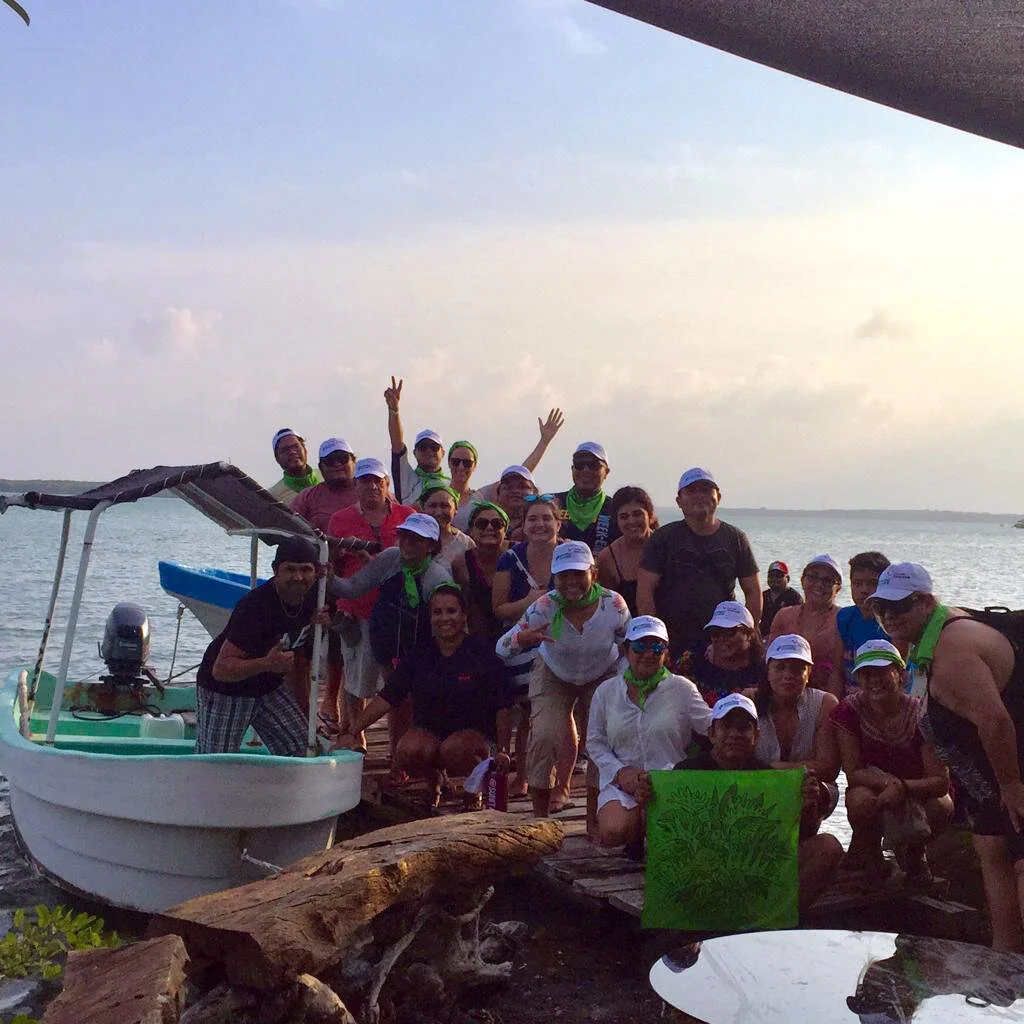
En segundo lugar, creemos que la educación ambiental debe ser impartida exclusivamente a niñas y niños. Claro que siempre será necesario formar y sensibilizar a nuestras futuras generaciones, aun así, uno de los principales retos como educadores ha sido poder llegar la mente y los corazones de nuestros líderes, gobernantes, empresarios, tomadores de decisiones, medios de comunicación, maestros y a partir de aquí, poder impactar el resto de nuestras comunidades. Es así como la Educación Ambiental es parte de un proceso continuo de formación, crecimiento y convivencia para cualquier sector, en cualquier edad.
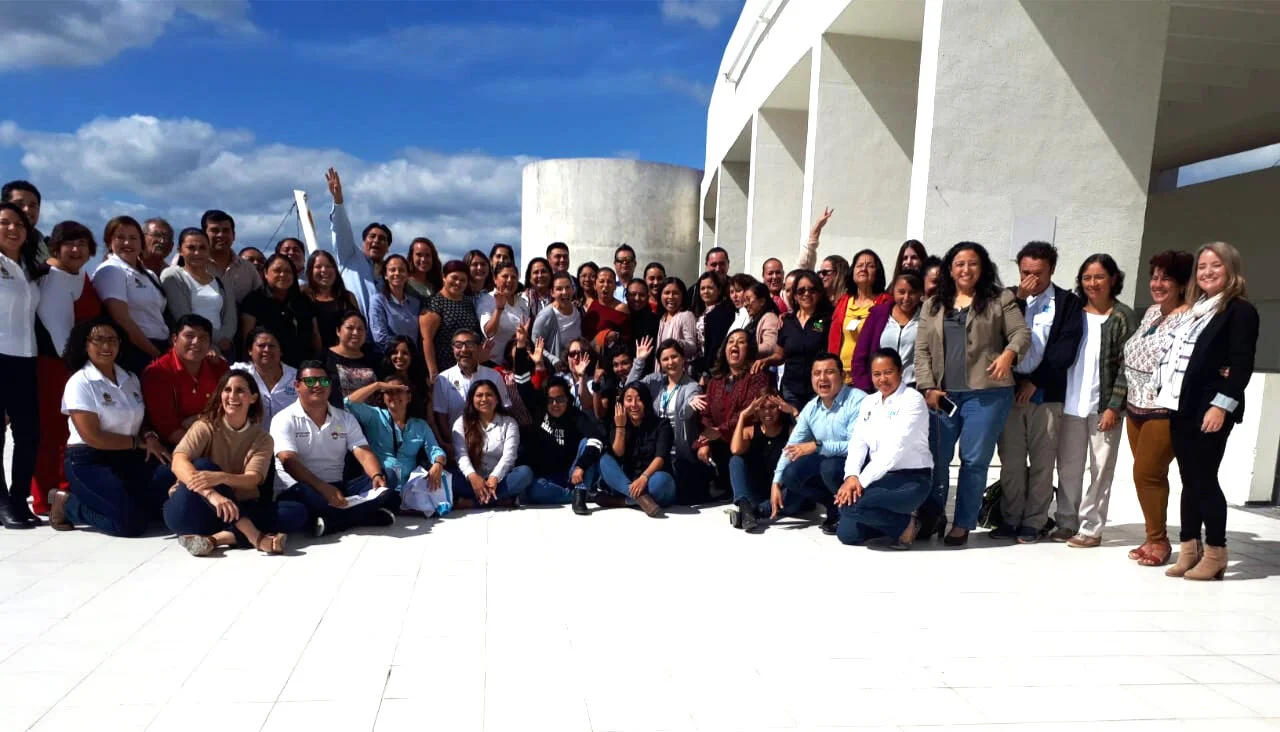
A veces, la vida te invita a hacer pausas en el camino y la reciente celebración del Día Mundial de la Educación Ambiental (26 de enero), me dio esta oportunidad. Al detenerme, puedo ver el camino que abrieron valientes educadores, aquellos verdaderos revolucionarios e innovadores de una educación más congruente con nuestra naturaleza humana y atentos a la necesidad de estar en equilibrio con nuestro mundo natural. Hacia el futuro, me ilusiona ver la oleada de nuevas generaciones que se suman a una cultura de responsabilidad ambiental y social desde cualquiera de sus trincheras. Aun ante la crisis que hoy vivimos, creo que es momento de reconceptualizar nuestros propósitos conservacionistas y enriquecer nuestros proyectos con las herramientas necesarias para construir una mejor sociedad, incluyendo la educación ambiental.
I close my eyes and a carpeted room appears in my mind, with a window at the back, a purple curtain and a bed against the wall. I like to be here. In the center of the room, I can see myself at the age of six, sitting my stuffed animals on the floor, in a circular fashion; there is a small blackboard in the middle and white chalk ready to go. Now they are all settled and attentive, I sit down with them, hold the blackboard, take a piece of chalk and tell them about what I learned today at school.
I open my eyes and see a photograph taken 20 years later, which curiously resembles the scene of those times. Sitting on the sand, the Caribbean Sea in the background and around me, girls and boys from Mayan communities who had never visited the beach and the sea before. In my hand, I hold a puppet and share a story about the ocean, its inhabitants and why their life in the jungle is also connected to the well-being of this ecosystem. I remember that day very well, full of questions, curiosity and astonished faces from the children.
I studied Biology because I declare myself an admirer of the phenomenon called LIFE, in all its manifestations. From the tiny microorganisms that are perfectly designed to survive, to the majestic blue whale that emits detectable undersea songs at over 700 kilometers - which is the distance, in a straight line, from Mexico City to Monterrey - incredible!
Learning from nature and admiring life has allowed me to understand that evolution has made its way in the most creative ways that we could imagine, that each form of life has a specific and necessary function and that humans are part of this complex network of connections on which we depend and must respect. This is how I realized that choosing the path of environmental education, as a specialty, would be a way to combine my taste for nature, with my vocation to share what I love. But, I never imagined the scope, power, challenges and responsibility that choosing that path would have.
Today, environmental education has a history of more than 50 years, which has received contributions from hundreds of conservationists, educators, academics, government officials, psychologists, sociologists, religious, lawyers and community leaders. The great constant in such a variety of paths traced during these years is that education is recognized as the most powerful tool to direct our way of thinking and our actions towards a shared responsibility for the care and use of our natural world. So, those of us who do environmental education have a common mission: to transform and guide our work groups towards a society that is more respectful and empathetic for all forms of life with which we coexist - including human communities. For this reason, it is said that Environmental Education is a tool for social transformation, what a challenge!
Curiosity and creativity are two very important allies on this path. Both come from almost primitive and wild impulses of our human condition. Curiosity and creativity connect us with our sensations and emotions in a direct way, which leads us to have thoughts that, in turn, develop knowledge. In this way, we are building our reality. As environmental educators, we must awaken curiosity and creativity in all the groups we work with, as a means of personal, unique and meaningful connection with the content we want to teach (whatever the topic).
I have come across two misconceptions about the work of environmental education. First of all, it is thought that it can be a removable appendage to our conservation projects, that is, something that can be removed if necessary - when staff, funds are lacking, or project timelines are shortened. This happens because we do not understand its importance as the guiding axis of social transformation and we come to classify it as a series of activities that could have a high visual impact, but with little depth. I am referring to activities such as beach cleanings, craft workshops, tree planting, etc., activities that are necessary and valuable, but which, when carried out in isolation, do not trigger a true shift in consciousness, skill development and values that a continuous training process can provide.
Second, we believe that environmental education should be taught exclusively to girls and boys. Of course, it will always be necessary to train and sensitize our future generations, even so, one of the main challenges as educators has been to reach the minds and hearts of our leaders, governors, businessmen, decision makers, the media, teachers and from here, to be able to impact the rest of our communities. This is how Environmental Education is part of a continuous process of training, growth and coexistence for any sector, at any age.
Sometimes life invites you to take breaks along the way and the recent celebration of World Environmental Education Day (January 26) gave me this opportunity. When I stop, I can see the path that brave educators opened, those true revolutionaries and innovators of an education more congruent with our human nature and attentive to the need to be in balance with our natural world. Looking to the future, I am excited to see the wave of new generations joining a culture of environmental and social responsibility from any of its trenches. Even in the face of the crisis we are experiencing today, I think it is time to reconceptualize our conservation purposes and enrich our projects with the necessary tools to build a better society, including environmental education.