
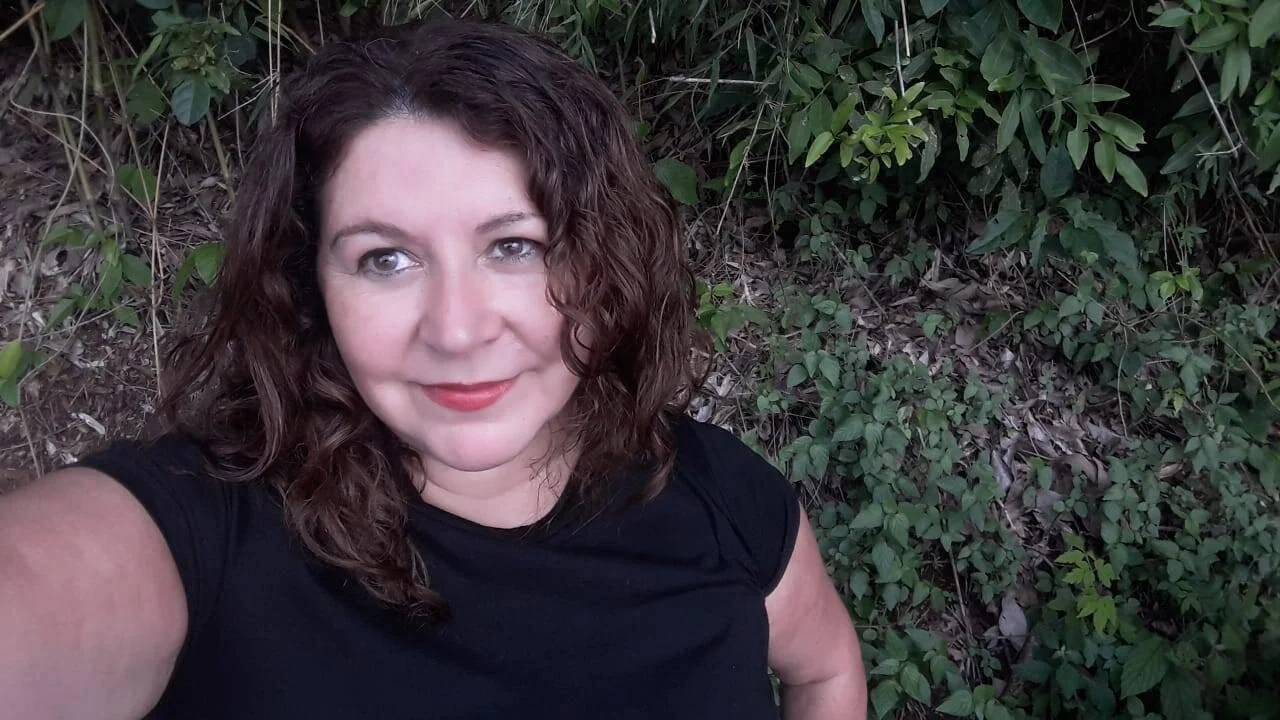
Silvia Romero
Como cronista del ambiente, me tocó visitar con el Portal de noticias Misiones Ambiental, la localidad de Andresito, provincia de Misiones República Argentina.
Tuve la suerte de nacer en Misiones, provincia que alberga al 52 % de la biodiversidad argentina y que, por tal motivo, es Capital Nacional de la Biodiversidad.
Era uno de los días más lluviosos de febrero y llegamos a una zona muy cerquita del Rio Iguazú, pasamos por Surucuá, una reserva que abarca 120 hectáreas. Se trata de un área de península boscosa que se inserta a través del río Iguazú en el Parque Nacional Do Iguazú en Brasil, y hace contacto en su región oeste con al Parque Nacional Iguazú en Argentina. Esta característica geográfica la convierte en un corredor natural estratégico para la conexión entre ambos parques. El área se encuentra dentro de la ecorregión del Bosque Atlántico del Alto Paraná o selva paranaense.
Una de las funciones del Portal es visibilizar el trabajo de las mujeres en torno al ambiente y la conservación. Por lo que me contacté con Lorena Cardenal, una joven guía de turismo que hace unos 5 años se está dedicando a su carrera y en ese momento estaba cumpliendo funciones en la reserva.
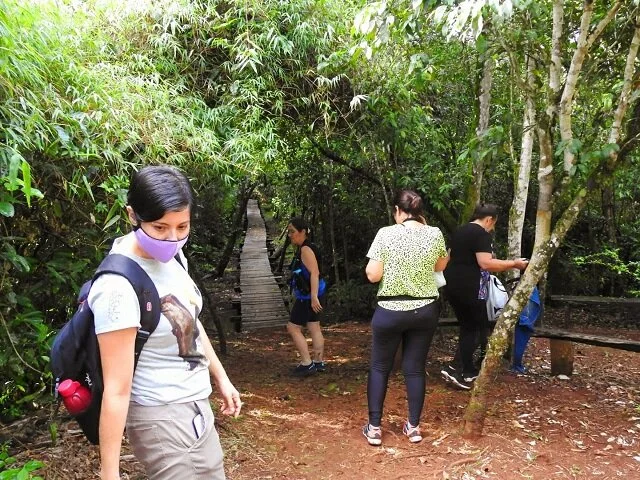
Lorena Cardenal
Surucuá es un proyecto amplio, que en un principio fue pensado como lugar de observación de aves y luego se diversificó en varios rubros.
La provincia cuenta con más de 500 especies de aves que representan más del 45% de las aves citadas para el país.
Justamente, el nombre de la reserva es un homenaje a un ave de la familia Trogonidae, cuyo nombre común es Surucuá .
Y como la libreta de campo siempre se lleva, en medio de intercambio de comentarios acerca de la identificación de mariposas y de mamíferos de la selva Misionera, charlamos con Lorena, que previamente nos había guiado en un recorrido espectacular, lleno de aventuras dentro de una selva muy húmeda ya que de a ratos llovía copiosamente.
Igualmente, con lluvia la selva misionera tiene su encanto, uno de ellos la diversidad de hongos que se encuentran a cada paso con ese tiempo propicio.
Lorena nos contaba que para ella la conservación es un trabajo de todos los días. El ámbito turístico también te hace un ser conservador, pero depende de cada uno y la sensibilidad que llevamos dentro.
Realmente Lorena nos incentivó la curiosidad por la selva, entre el suelo rojizo al que los misioneros llamamos “tierra colorada” y ese excitante verde brillante y mojado de la vegetación.
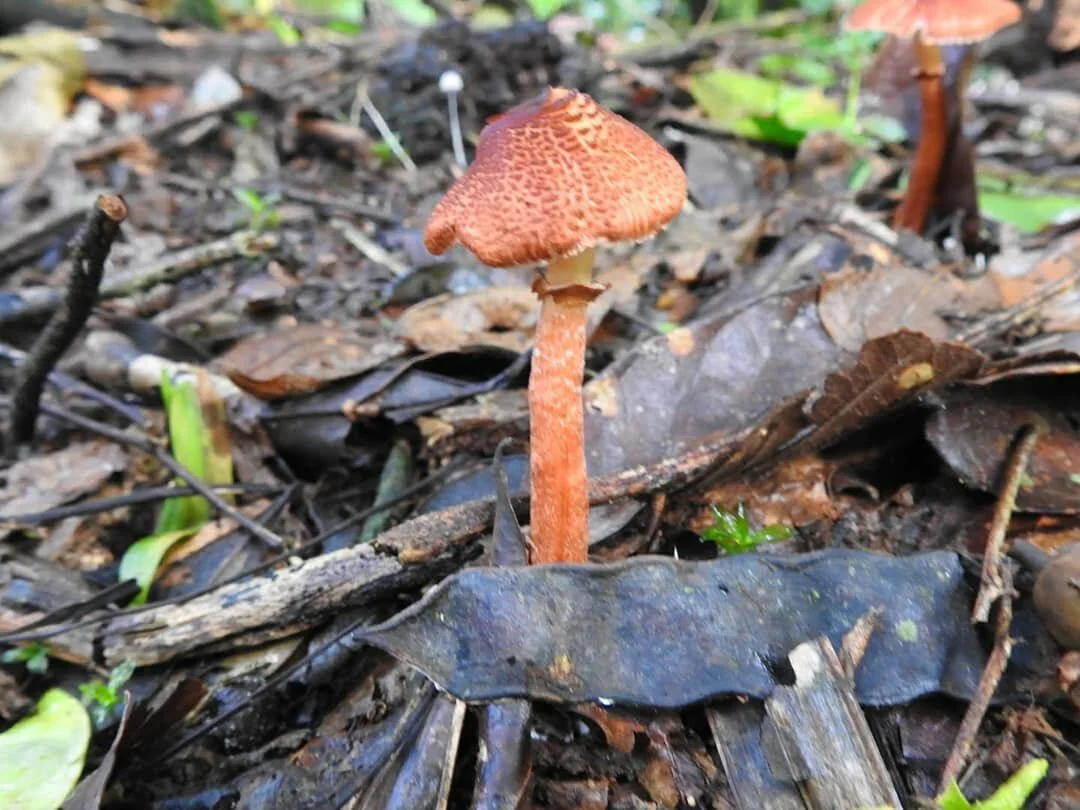
Ella nos comentaba que era determinante como guía, que pueda conocer de aves, insectos y últimamente del mundo de los hongos de la selva, que es un campo por descubrir.
Efectivamente el reino fungi estaba en su máximo potencial ese día. Mientras una familia de monos caí (Sapajus nigritus) salió a curiosear desde lo alto de los Jacaratias (Jacaratia spinosa) le pregunté a Lorena acerca de su conexión con la naturaleza.
Mujer y Naturaleza van de la mano, como el agua, es algo que fluye señaló nuestra guía.
El ser mujer ya te hace fuerte, porque las mujeres venimos sesgadas de ciertos derechos que ahora por suerte están volviendo a incorporarse en nuestras vidas, y el hecho de tener el derecho a crecer en un ambiente sano creo que debería formar parte de nuestras vidas.
Yo la veía tan conectada a nuestra guía, tan en su lugar… una mujer en la selva.
Si fueras algún ser de la naturaleza, le pregunté a Lorena ¿Cuál serias y por qué?
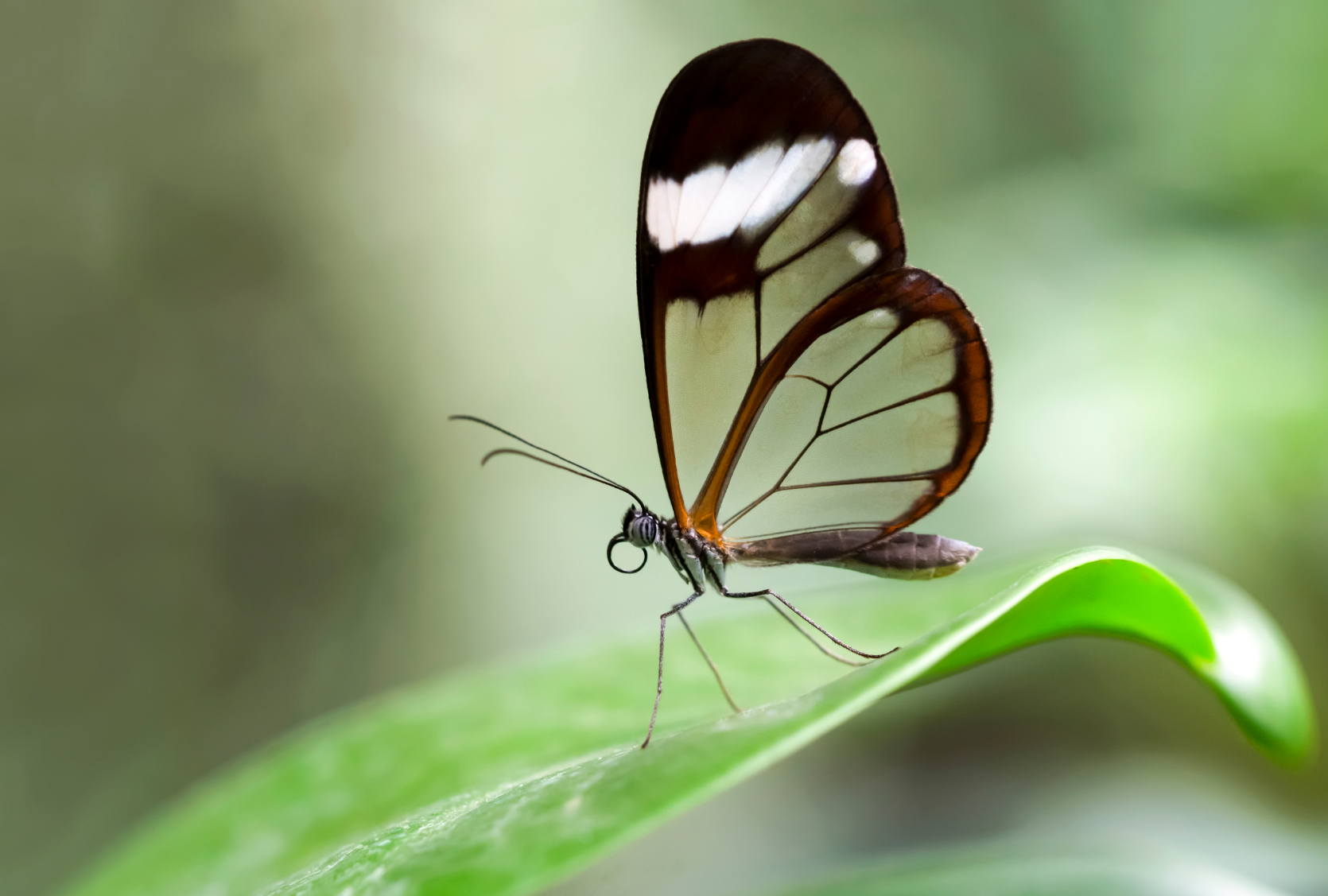
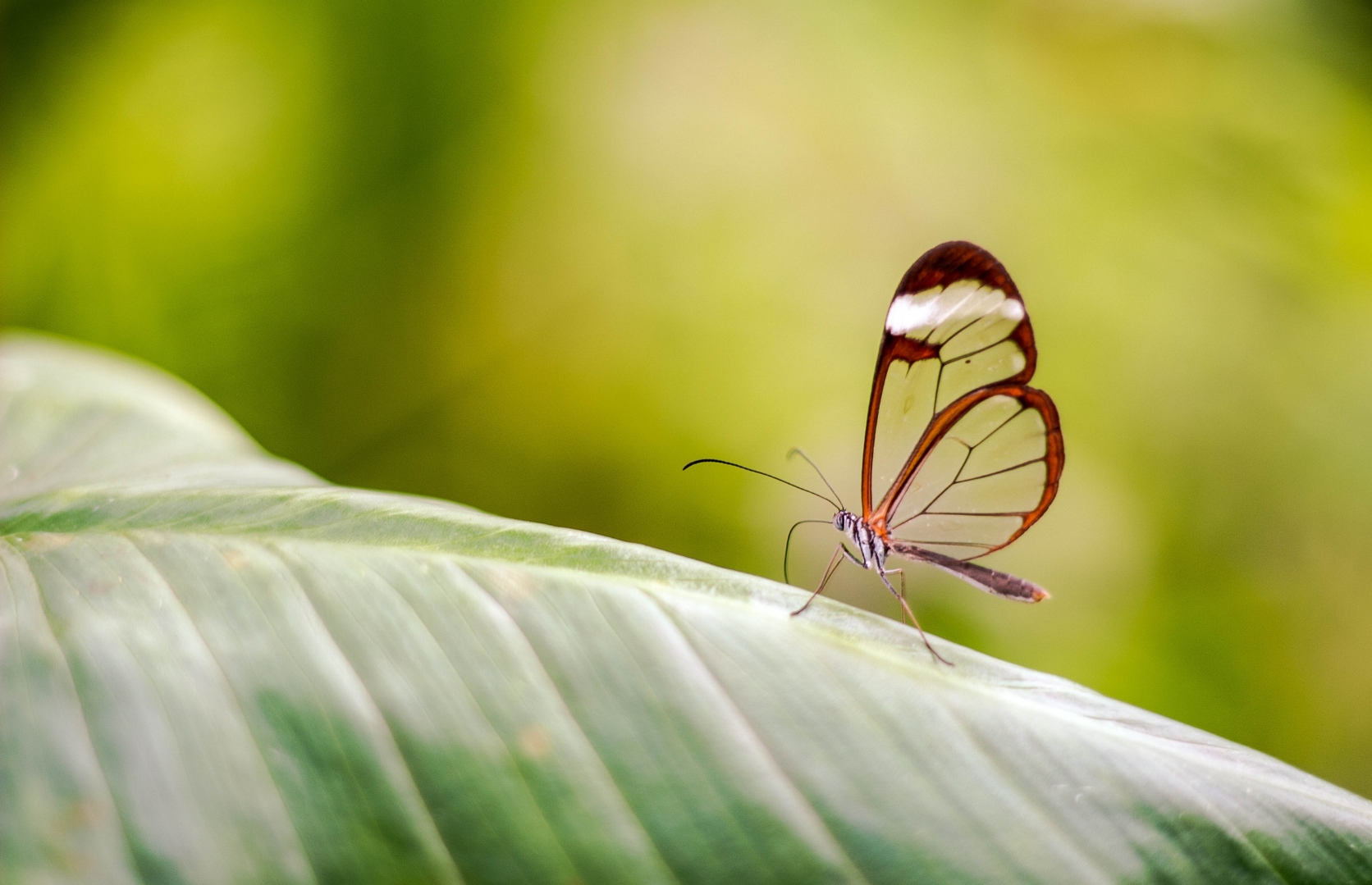
Sería un insecto muy particular de nuestra selva, que a veces pasa desapercibida, una mariposa que se llama cristalina, hay varias especies. Son unas mariposas pequeñas de alas transparentes y de ahí viene el nombre, muy selváticas y suelen estar escondidas en las penumbras en el sotobosque.
Me caracterizaría con esta mariposa, que cumple un rol muy importante porque es polinizadora, pero ella pasa desapercibida, hace su trabajito y pone su grano de arena dentro de la selva.
Creo realmente que, el ser que ha elegido Lorena la caracteriza muy bien ya que vemos mucha humildad, generosidad y pasión al enseñarnos cada flor, cada hongo, y cada mariposa y su función dentro del ambiente natural en la Reserva Surucuá.
Dicen que si te cruzas con la “corrección” (hormigas misioneras muy “traviesas”), volvés a Surucuá.
Esperamos ansiosamente regresar a ese lugar maravilloso con nombre de ave misionera y donde el leve aleteo de la mariposa cristal es sinónimo de paz.
As a journalist of the environment, I had to visit the town of Andresito, Misiones República Argentina province with the Misiones Ambiental news portal.
I was lucky enough to be born in Misiones, a province that is home to 52% of Argentina's biodiversity and which, for this reason, is the National Capital of Biodiversity.
It was one of the rainiest days in February and we reached an area very close to the Iguazú River, we passed through Surucuá, a reserve that covers 120 hectares. It is an area of forested peninsula that is inserted through the Iguazú River in the Do Iguazú National Park in Brazil, and makes contact in its western region with the Iguazú National Park in Argentina. This geographical characteristic makes it a strategic natural corridor for the connection between both parks. The area is within the ecoregion of the Atlantic Forest of Alto Paraná or Paraná jungle.
One of the objectives of the Portal is to highlight the work of women around the environment and conservation. So I contacted Lorena Cardenal, a young tour guide who has been dedicating herself to her career for about 5 years and at that time she was working in the reserve.
Surucuá is a broad project, initially thought as a place for bird watching and later diversified into various areas. The province has more than 500 species of birds that represent more than 45% of the birds cited for the country. Precisely, the name of the reserve is a tribute to a bird of the Trogonidae family, whose common name is Surucuá.
And since I always carry my field notpad, in the midst of exchanging comments about the identification of butterflies and mammals of the Misiones jungle, we chatted with Lorena, who had previously guided us on a spectacular journey, full of adventures within a very humid jungle since at times it rained copiously.
Likewise, with rain the Misiones jungle has its charm, one of them the diversity of fungi that are found at every step during this favorable weather. Lorena told us that conservation is an everyday job for her. The tourist field also makes you a conservative being, but it depends on each one and the sensitivity that we carry within.
Lorena really encouraged us to be curious about the jungle, between the reddish soil that the missionaries call “tierra colorada” and that exciting bright and wet green of the vegetation.
She told us that she was decisive as a guide, that she can learn about birds, insects and lately the world of jungle fungi, which is a field to discover.
Sure enough, the fungi kingdom was at full splendor that day. While a family of caí monkeys (Sapajus nigritus) came out to browse from the top of the Jacaratias (Jacaratia spinosa), I asked Lorena about her connection with nature.
Woman and Nature go hand in hand, like water, it is something that flows, our guide pointed out.
Being a woman already makes you strong, because women are biased from certain rights that are now fortunately re-incorporating into our lives, and the fact of having the right to grow up in a healthy environment I think should be part of our lives.
I saw her so connected to our guide, so in her place… a woman in the jungle.
If you were some being of nature, ask Lorena, which one would you be and why?
She would be a very particular insect of our jungle, which sometimes goes unnoticed, a butterfly called glasswing, there are several species. They are small butterflies with transparent wings and that's where the name comes from. They are very tropical and are usually hidden in the shadows in the understory.
I would characterize myself with this butterfly, which plays a very important role because it is a pollinator, but she goes unnoticed, she does her little job and puts her grain of sand inside the jungle.
I really believe that the being that Lorena has chosen characterizes her very well since we see a lot of humility, generosity and passion in teaching us each flower, each mushroom, and each butterfly and its function within the natural environment in the Surucuá Reserve.
They say that if you come across the "correction" (very "naughty" local ants), you will return to Surucuá.
We look forward to returning to that wonderful place named after a Misiones bird and where the slight flapping of the crystal butterfly is synonymous with peace.