
Brenda Virginia Castro
Artista Visual/ Dibujante
Vengo del lugar en donde se tuercen los caminos, del cerro torcido y en donde se adora al Dios Coltzin. Culiacán, mi casa, un lugar entre la sierra y mar.
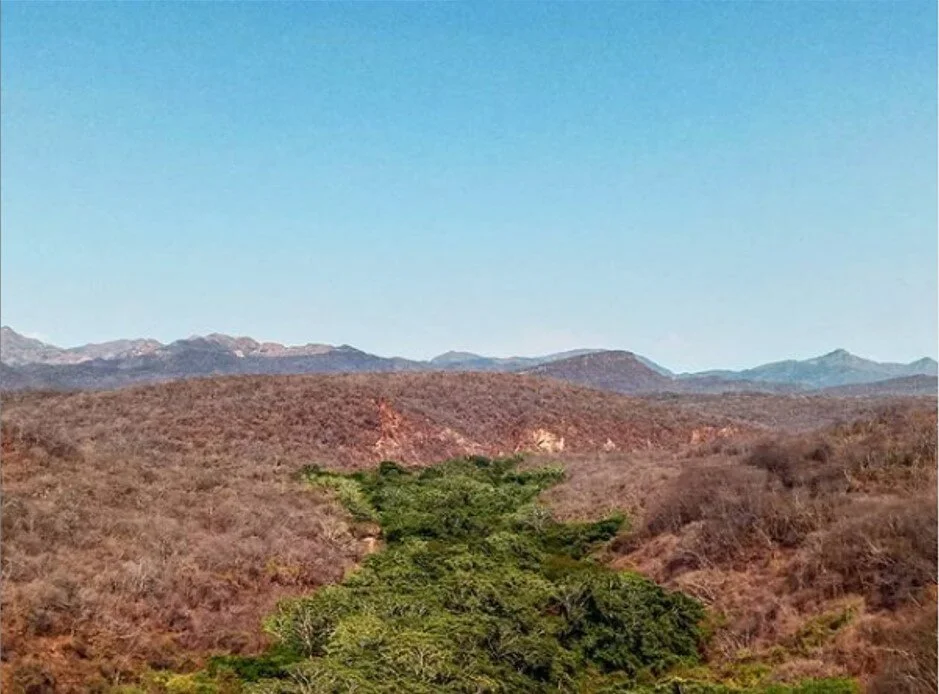
Pegaditos a los ríos y a la humedad constante del ambiente, nos acompañan año tras año las probabilidades de ciclones, tormentas tropicales, huracanes, sequias, heladas, desbordamiento de ríos y canales. Aunque no siempre nos llegan todos estos fenómenos naturales, la amenaza es tomada ya con naturalidad como pasa con las poblaciones y ciudades que deciden asentarse cerca de alguna corriente de agua natural.
Nuestra relación con el agua es inherente a nuestra condición humana y determina como nos desarrollamos en este territorio tan emblemático. Aunque podría mencionar un sin fin de actos violentos y delictivos que acontecen en esta ciudad, resaltaré uno en particular de 2019 en donde un 17 de octubre, la ciudad fue tomada por el crimen organizado, generando pánico en todos los que habitamos este lugar. A este evento se le conoció popularmente como el Culiacanazo y no es difícil encontrar información al respecto.
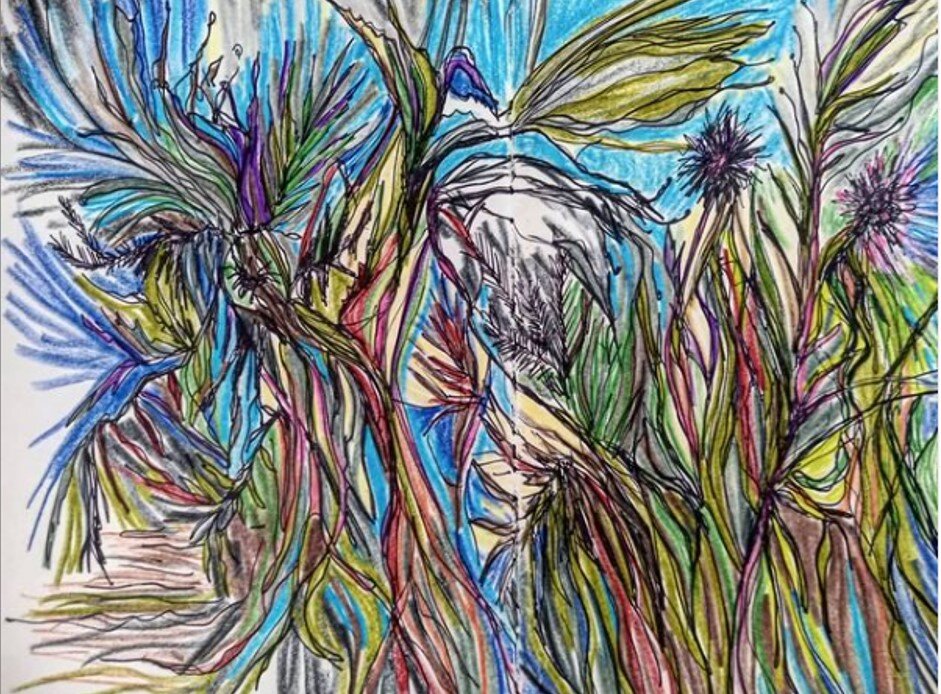
Mi práctica artística ha estado enfocada en el estudio del paisaje, de observarlo, comprenderlo y sobre todo comprenderme dentro de él. Mi contexto, violento, inseguro y siempre retador, antes y después del Culiacanazo, detona en mí la cantidad de inconformidad necesaria para revisar de manera mucho más crítica y curiosa, la versión de nosotros mismos como sociedad; la común y corriente, la que vive día a día las consecuencias de estos conflictos interminables de poder. La tierra, el territorio, el agua.
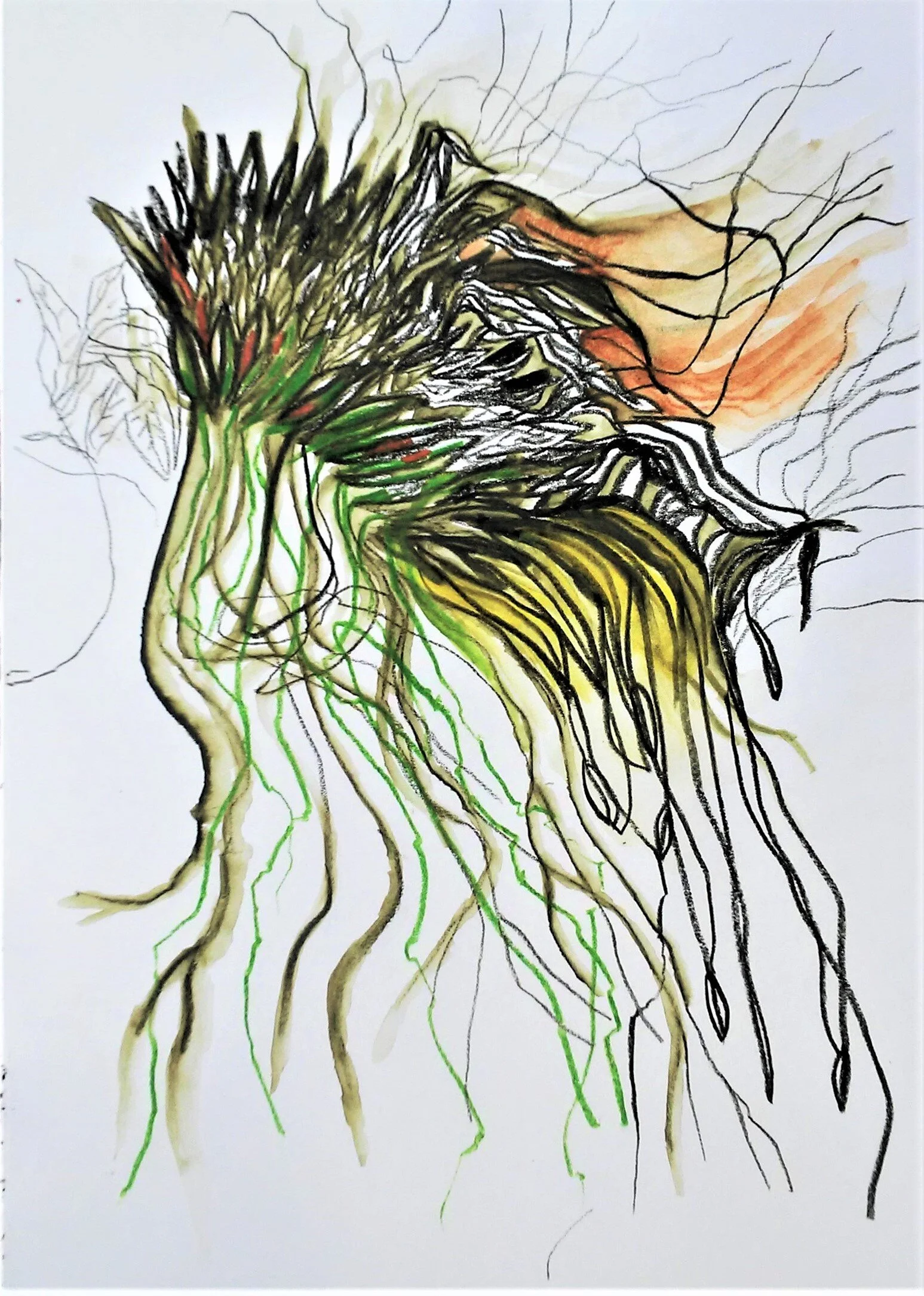
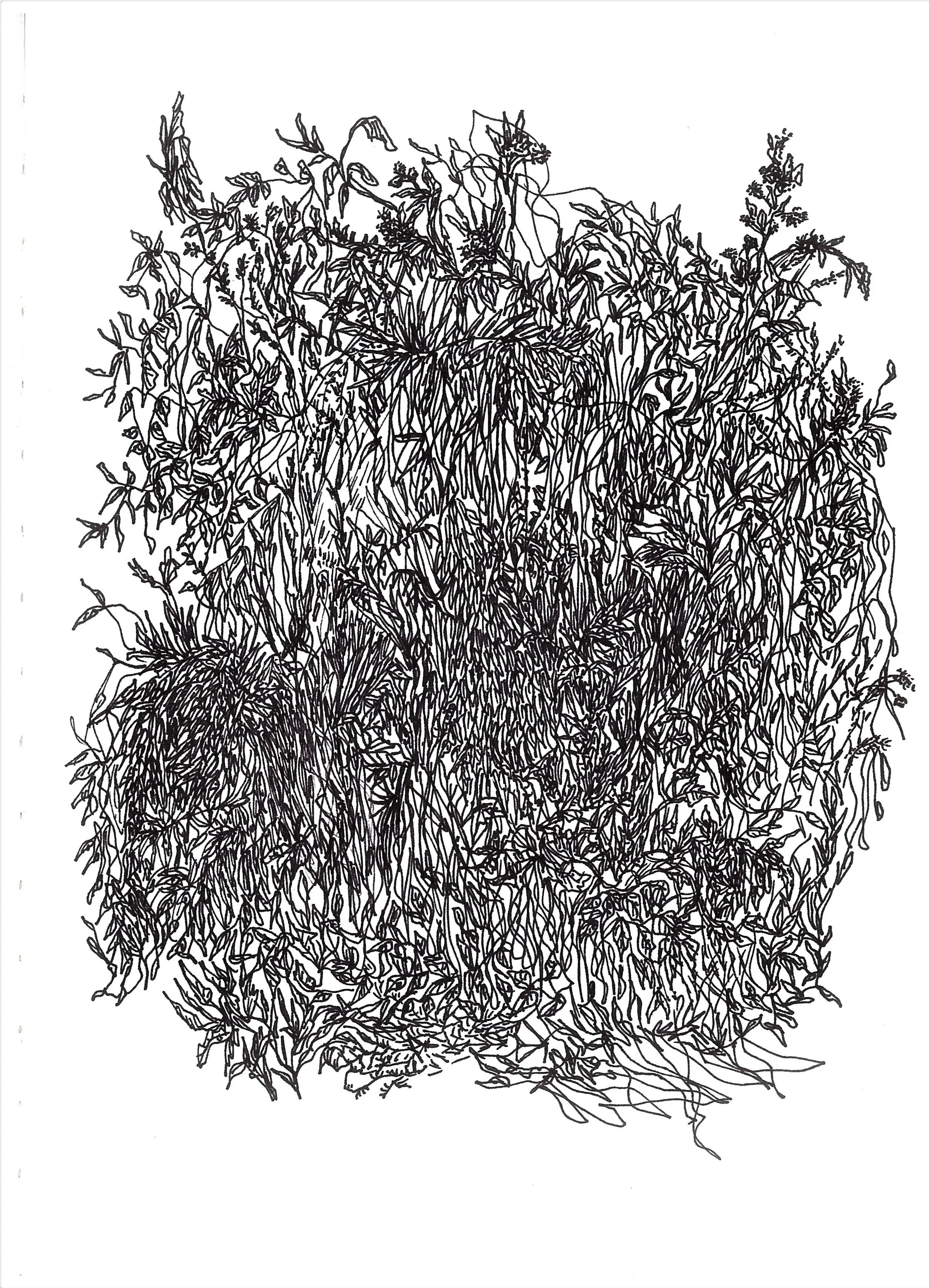
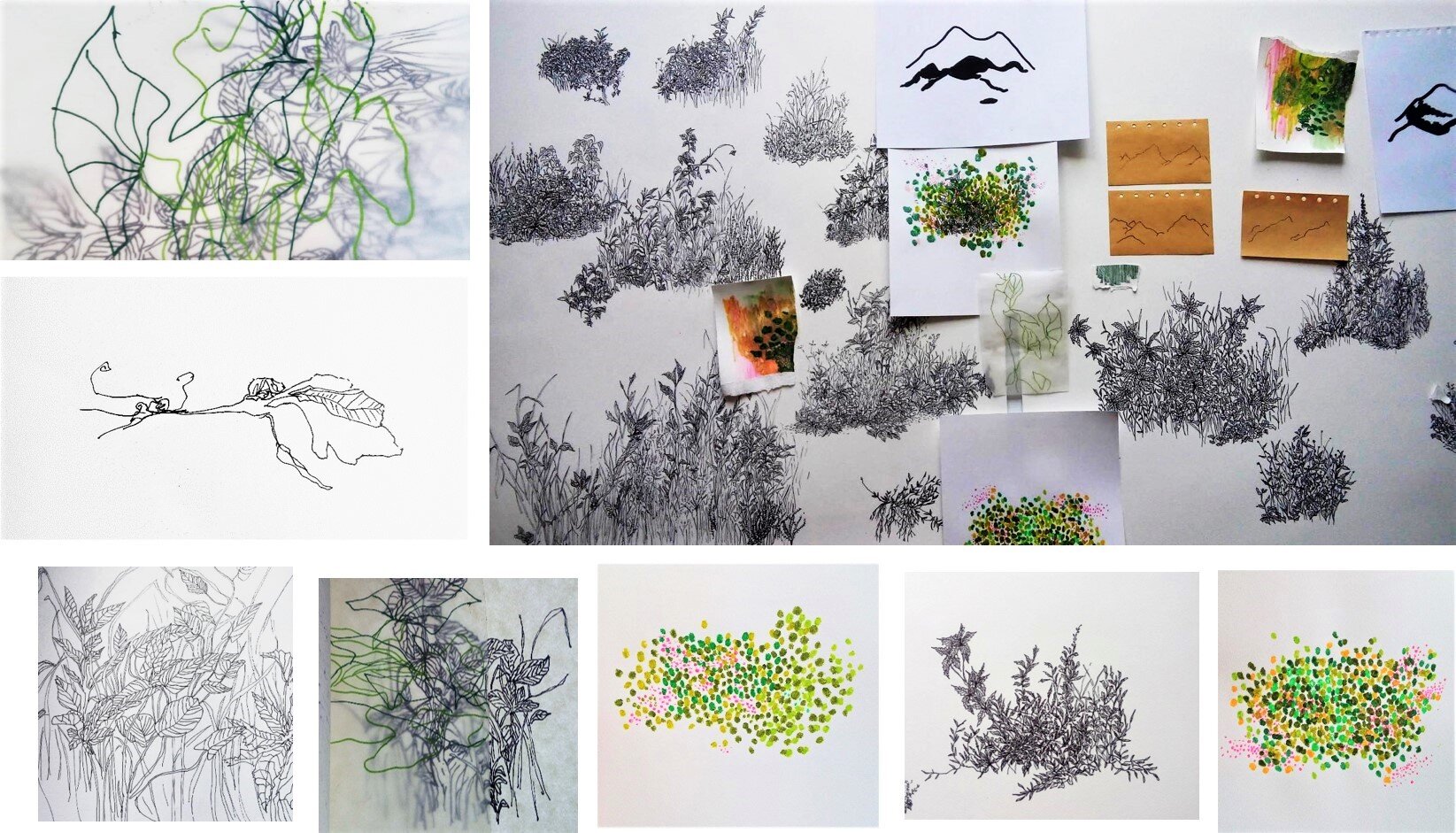
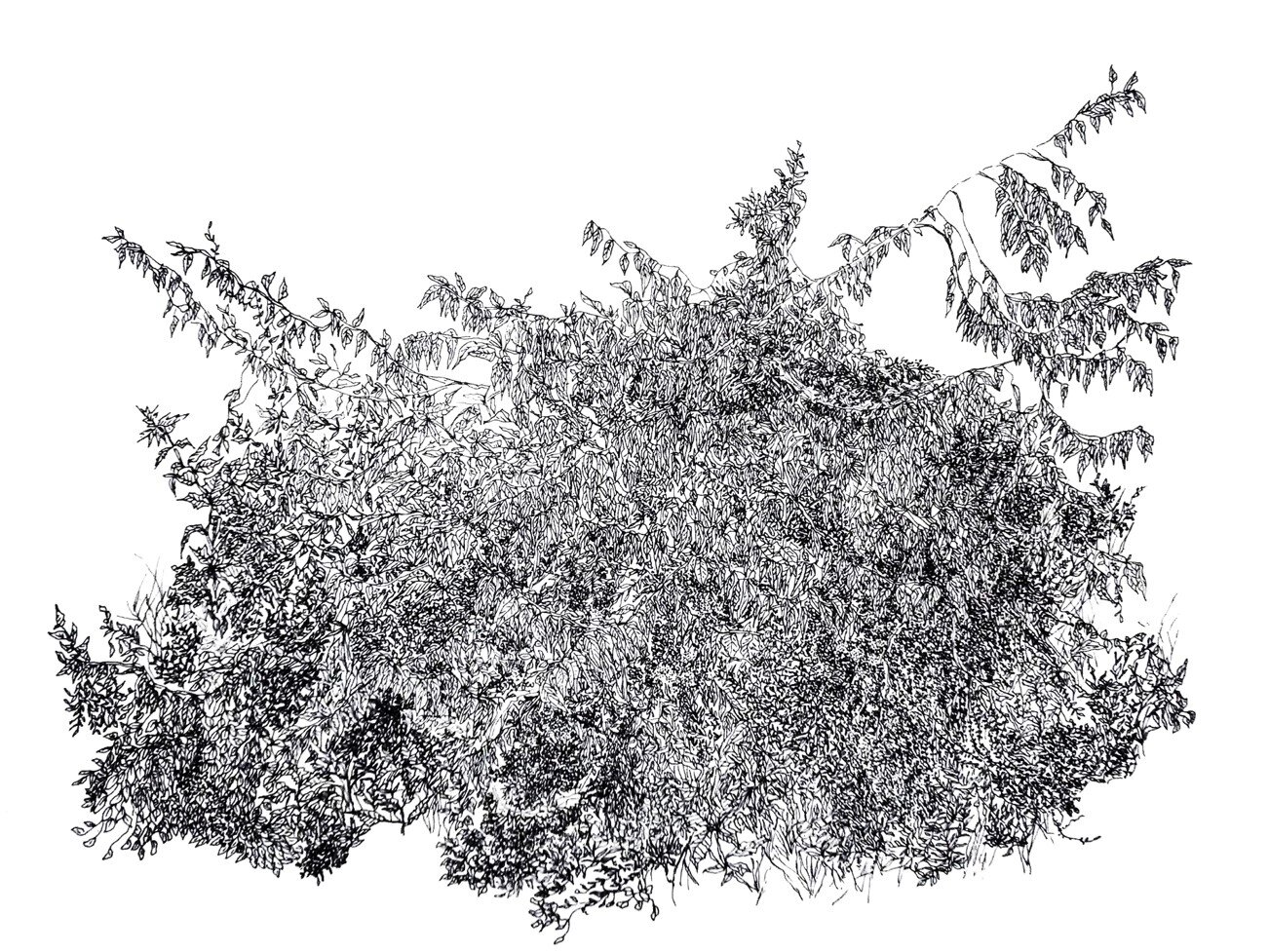
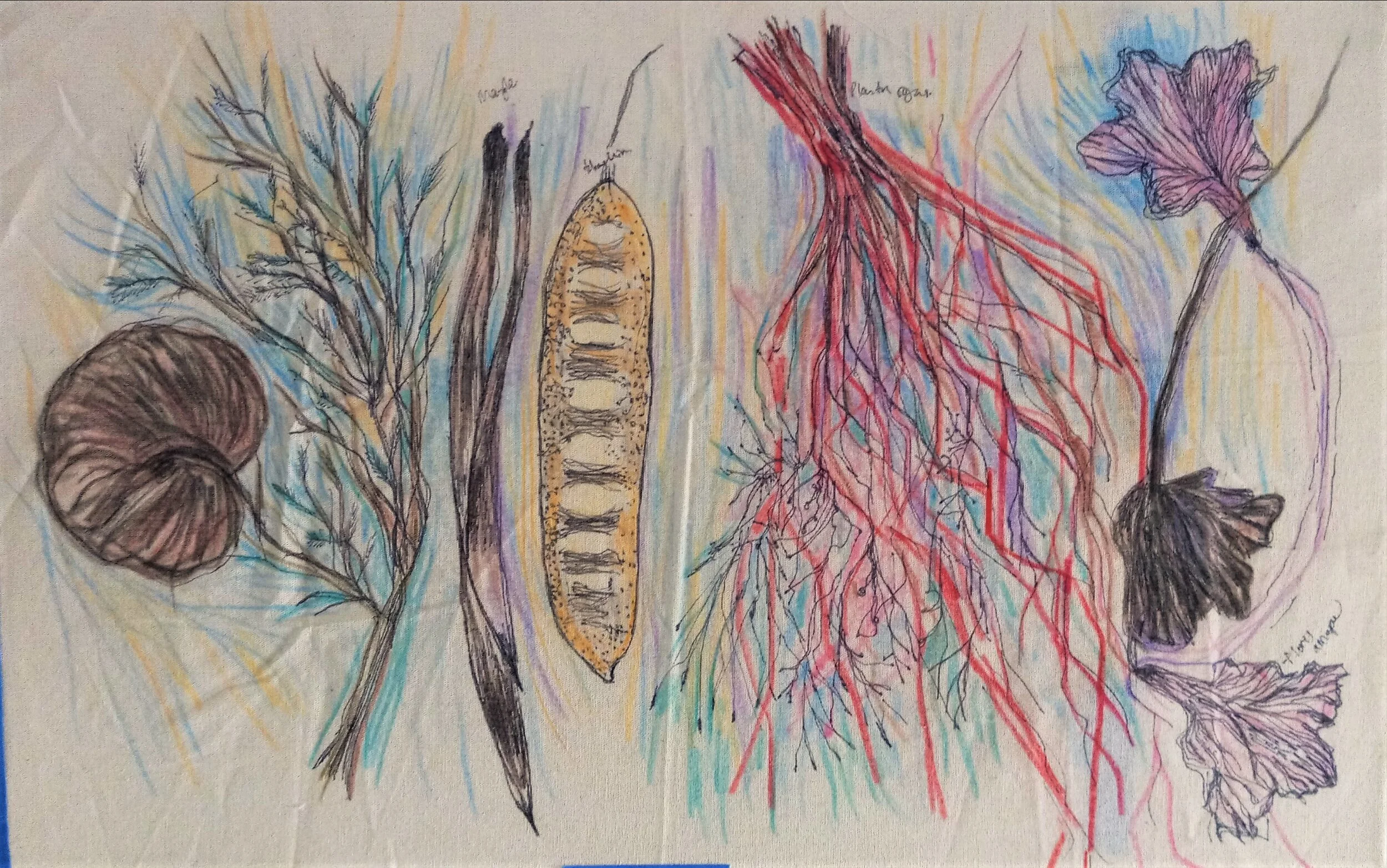
¿Cómo nos define nuestro territorio? ¿Qué es lo que vive dentro de él? Tratando de volver la mirada al origen de los tiempos del Sinaloa prehispánico y de encontrar en esta relación ancestral con la naturaleza, tal vez, respuestas a nuestra realidad actual. Encontrarlas desde lo sensible y lo primario. Volver la mirada a la vida, a lo que resiste, como la maleza del monte que trepa hasta alcanzar la luz.
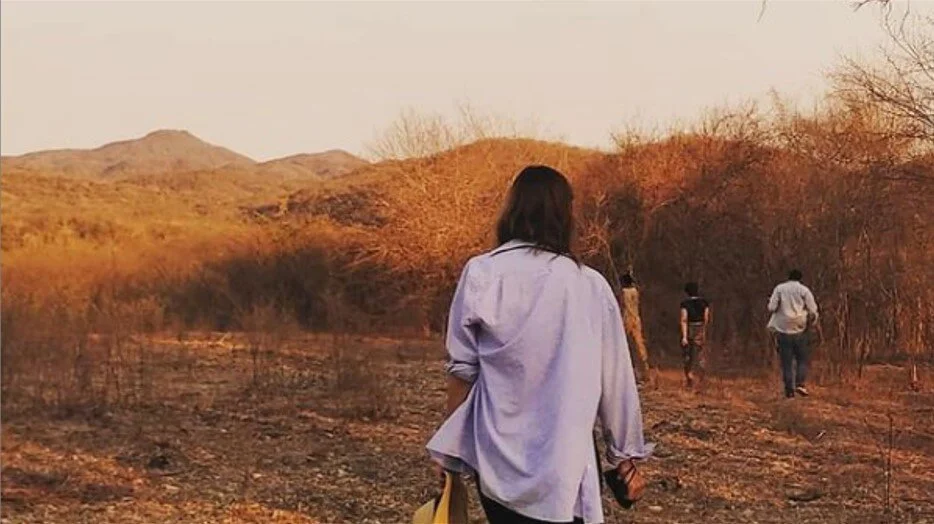
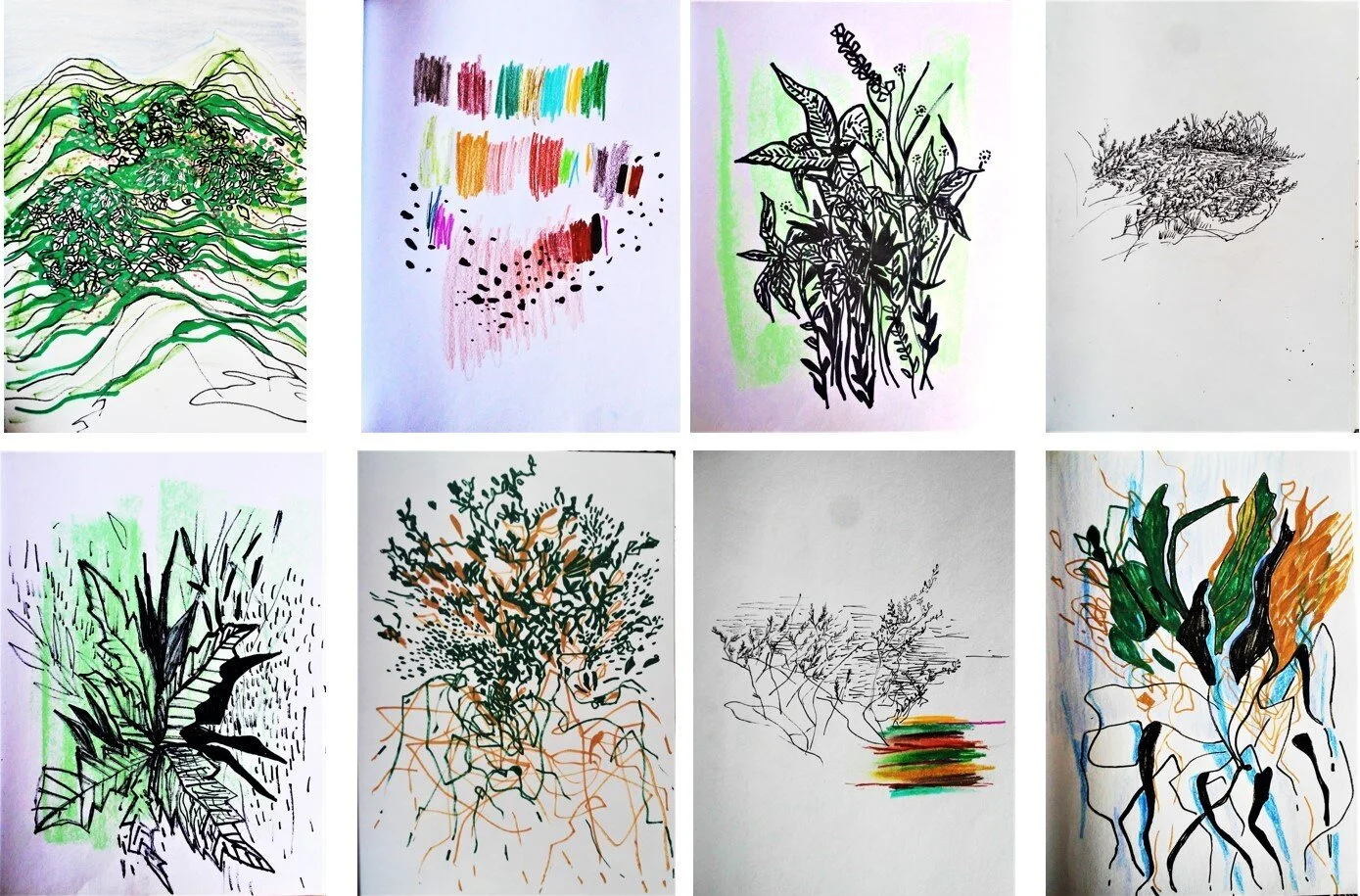
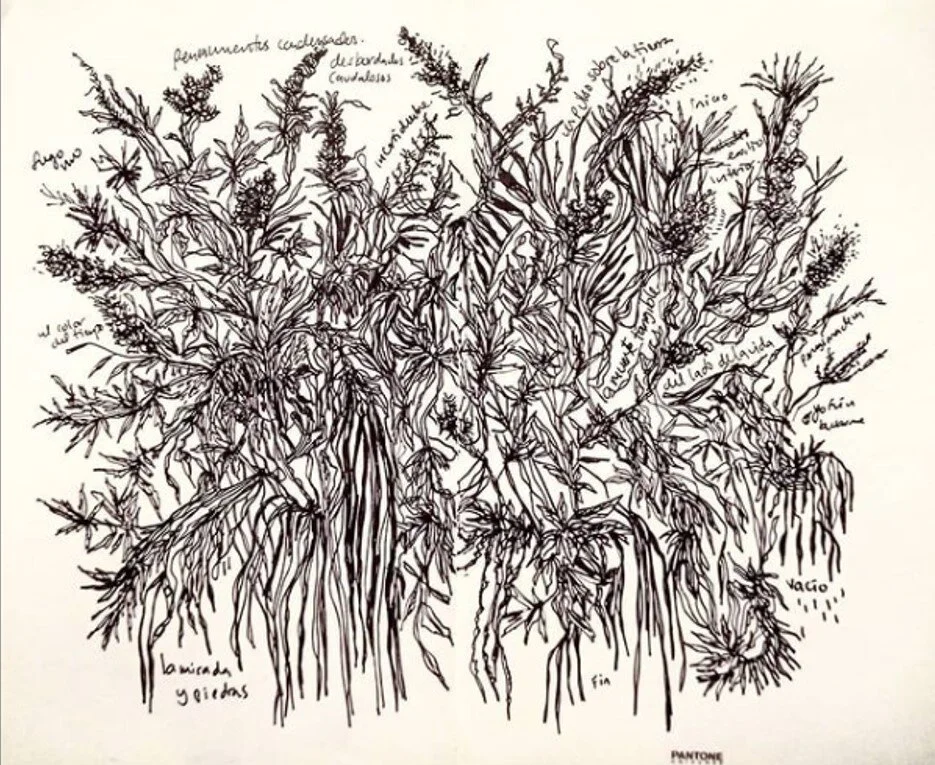
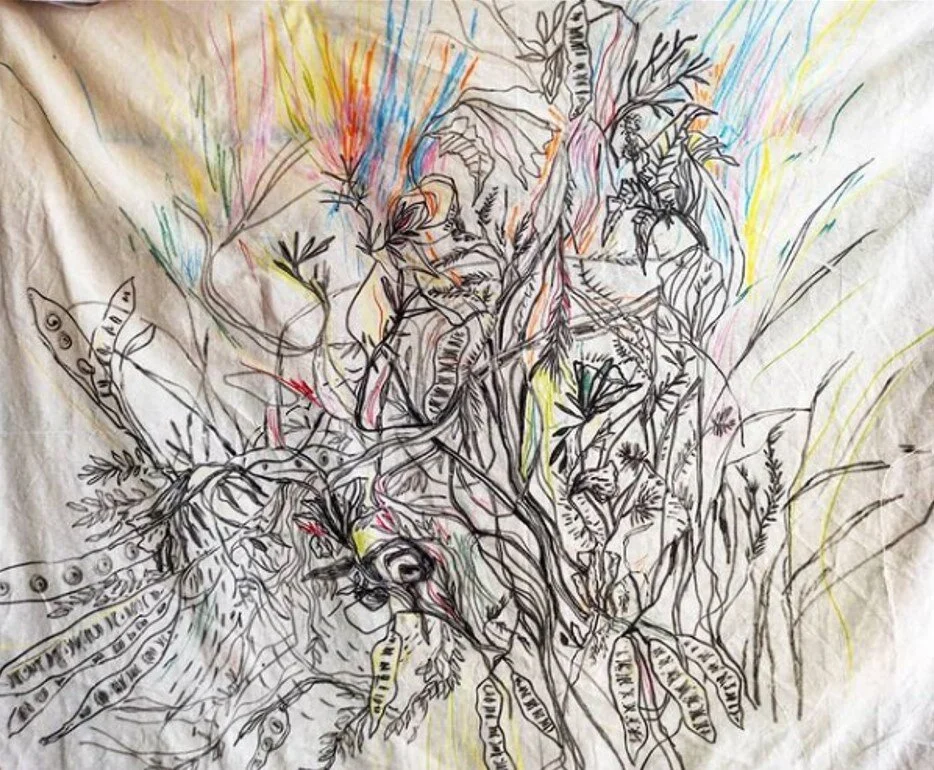
A partir de 2019 comienzo a desarrollar mi proyecto de dibujo Ser absoluto río (Museo de Arte de Sinaloa, 2020), este proyecto se divide en varias etapas hasta la fecha, teniendo líneas de investigación como brazos de río, que seguirán nutriendo a la corriente principal. Temporada de lluvia, Dos miradas para encontrar el paisaje, Vengo de la de orilla del río, Así caminan las raíces, Nocturnos, entre otros, son algunos de los cuerpos de obra que integran el proyecto general, desarrollados con distintas técnicas, formatos y soportes.
Lo que busco develar en esta búsqueda estética a través del dibujo, es el vínculo innato que mantenemos hacia los ríos y el paisaje, desde lo figurativo, lo abstracto, la observación rigurosa y el fragmento en la representación que me permitirá hacer nuevas composiciones.
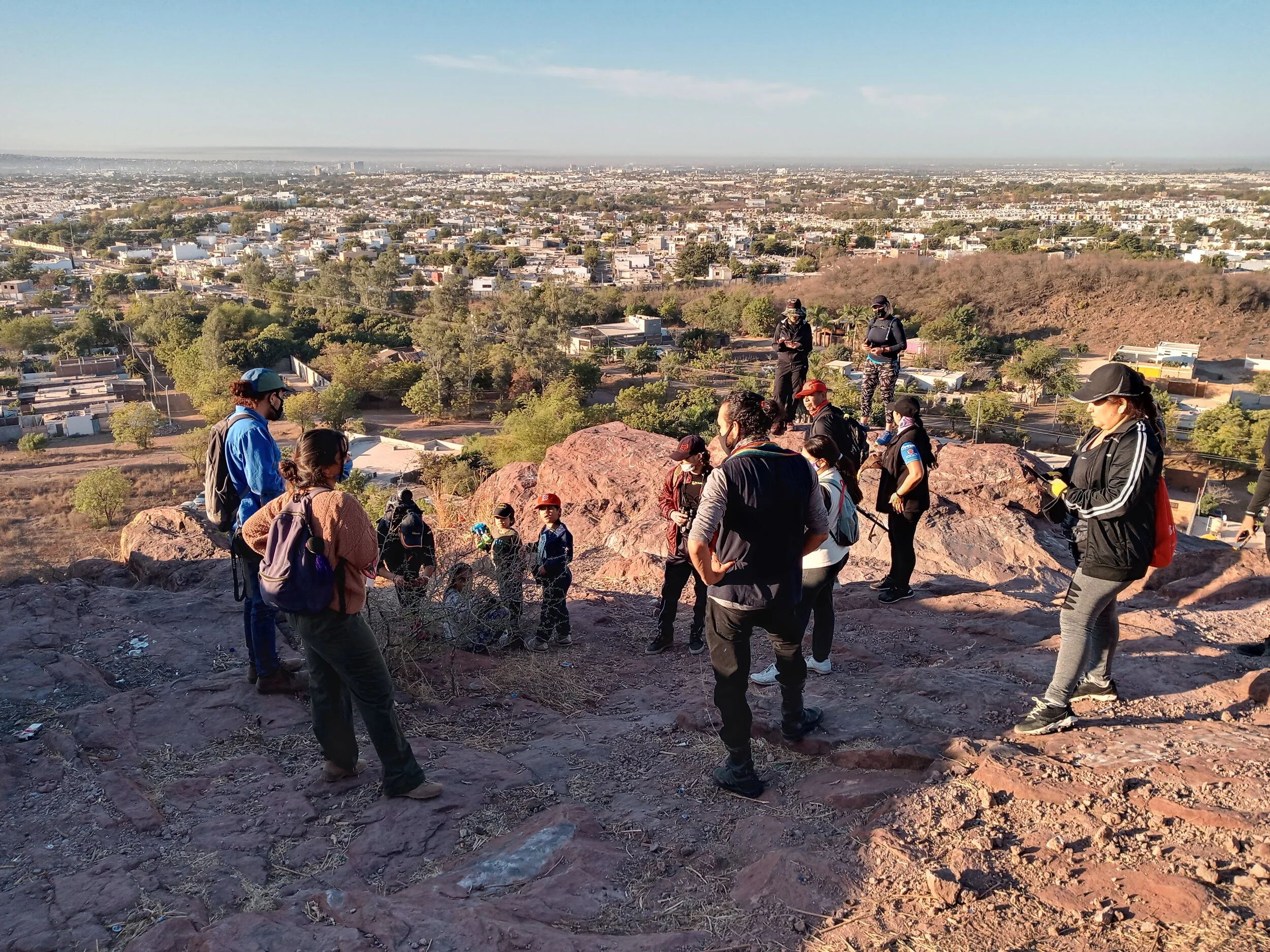
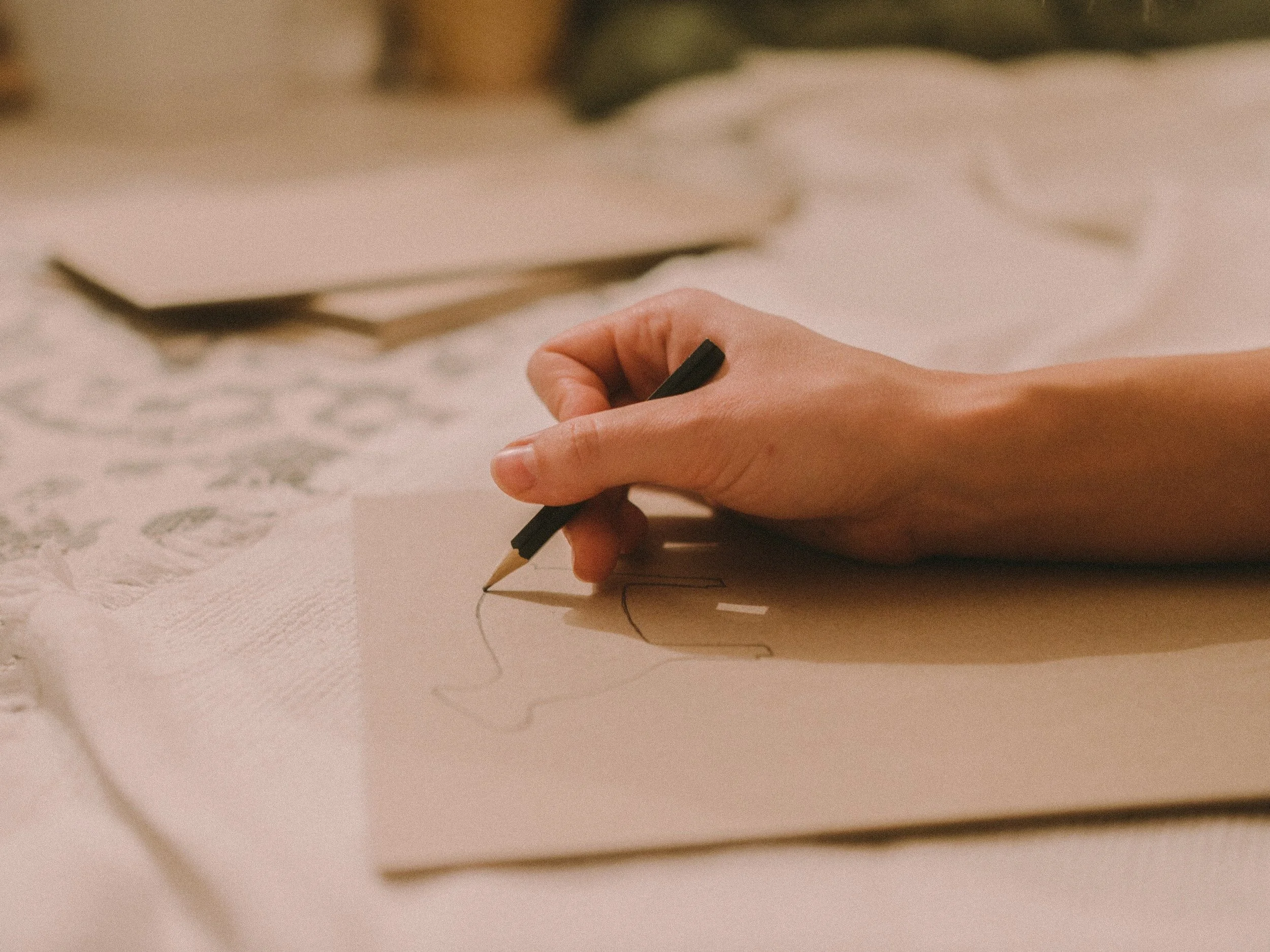
Gracias a este interés personal por conocer y rever nuestro entorno desde el dibujo, he podido relacionarme con diversos colectivos de la ciudad de Culiacán, preocupados por la conservación del medio ambiente y por compartir todo su conocimiento, con bastante corazón he de resaltar, sobre educación ambiental. Colectivos como Museo Vivo, Charas Sinaloa y Colectivo Malverde, integrados por biólogos y expertos de áreas afines, voluntarios diversos, artistas, humanistas y aventurados senderistas. Preocupados todos por la conservación, pero también por enseñarnos a ver, y esto creo que es lo que más aprecio, nos enseñan a ver, para enseñarnos a cuidar y amar lo que nos rodea. No podemos cuidar lo que no conocemos. Y en este contexto en particular, reacio y hostil, esta suma de esfuerzos y voluntades por enseñar y compartir es un gran acto de resistencia, tanto como el acto de observar para el que dibuja. La cámara, el binocular, el lápiz y el papel son nuestras herramientas de trabajo en los cerros y senderos que caminamos.
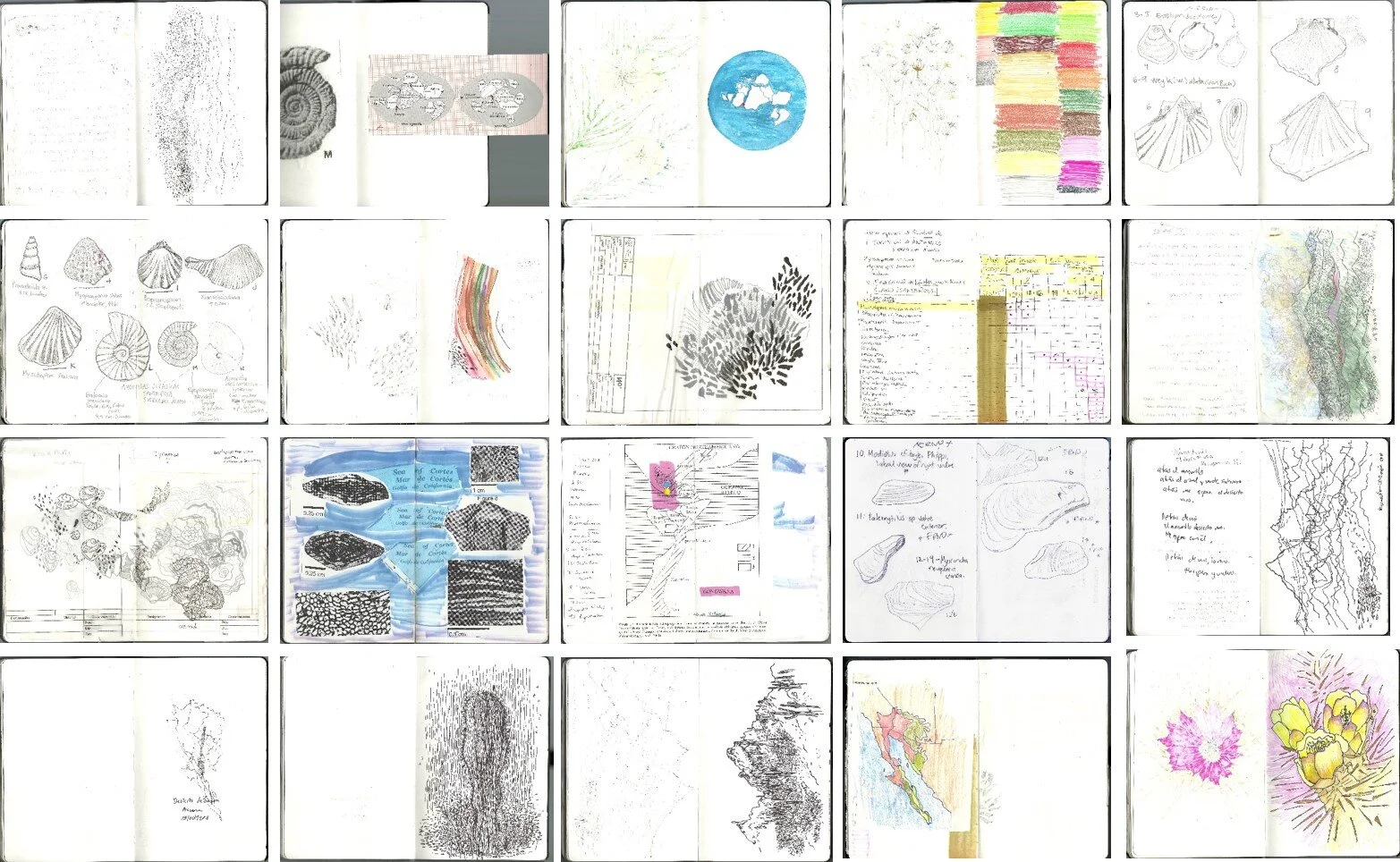
La obra en general, se ha ido construyendo poco a poco con caminatas constantes a los ríos Humaya y Tamazula que cruzan la ciudad y a través de las prácticas de dibujo en sitio específico. Estas prácticas y observaciones quedan registradas siempre en mis bitácoras de trabajo o en libretas de campo para artistas, en ellas describo lo que veo: la vegetación, el agua, los colores de las flores y del cielo, la tierra, el rastro del río, la luz etc. Datos sobre el ecosistema y observaciones del monte seco de día y de noche. Pero sobre todo, queda mi tiempo registrado mientras estoy inmersa en el paisaje. Mi tiempo desmenuzando y comprendiendo cada cosa que veo y llama mi atención, que finalmente retomaré para formular alguna nueva propuesta filtrada de las notas
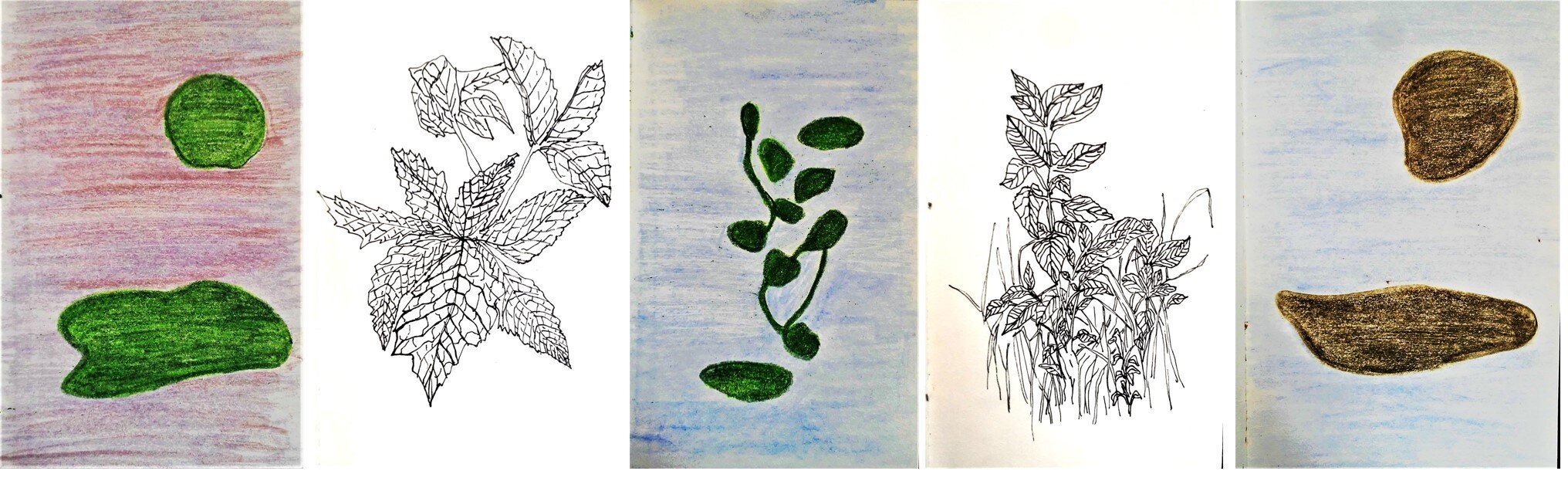
Desde hace algunos años busco vincular mis procesos creativos a la experiencia directa de explorar el sitio específico con trabajos de campo y he encontrado con este acercamiento y con la aproximación a otras disciplinas, como la geología, biología y antropología, un enriquecimiento formal y conceptual en mi obra artística, ayudándome a comprender distintas maneras de estructurar el paisaje y el territorio, aprendiendo a ver desde y con una nueva mirada, reconociendo formas para mi antes imperceptibles o desconocidas.
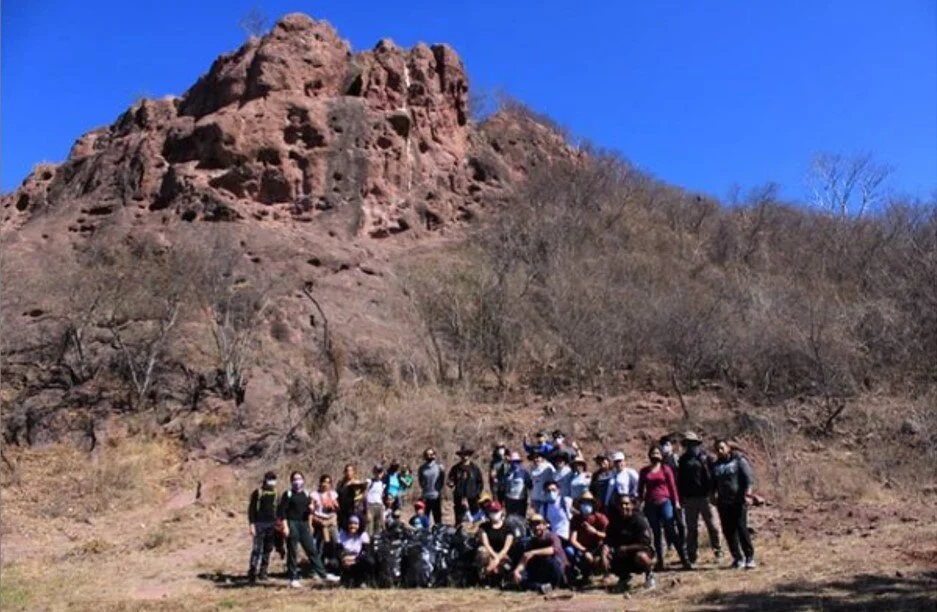
Comparto el pensamiento de la artista argentina Irene Kopelman, acerca de los mundos paralelos entre los artistas y los investigadores: ¨Puede que las metodologías difieran, pero las diferentes técnicas de representación son, en realidad, solo distintos sistemas de dirigirse a una misma intención que da origen al trabajo de científicos y de artistas: la capacidad de asombro acerca del mundo, y la dedicación y curiosidad para entenderlo. Pese a que ambos nos dedicamos a nuestras cuestiones y asuntos profesionales, pareciera que los científicos cortaran el “tema” de manera transversal, hacia el núcleo, en profundo hacia la raíz y de manera perpendicular hacia su crecimiento o evolución; mientras que yo exploro los temas lateralmente, al permitir asociaciones y conexiones entre la obra y los pensamientos. Ventajas y desventajas: mirar lateralmente es dejar espacio para cambiar el tema, para que nuevas cosas ingresen a mi visión.”
Ambas áreas, cada una con sus metodologías, procesos y formas de hacer, compartimos un rasgo posesivo que refleja una obsesión por conocer lo que nos rodea.
I come from the place where the roads twist, from the twisted hill, and where the God Coltzin is worshiped. Culiacán, my home, a place between the mountains and the sea.
Close to the rivers and the constant humidity of the environment, the probabilities of cyclones, tropical storms, hurricanes, droughts, frosts, overflowing rivers, and canals accompany us year after year. Although all these natural phenomena do not always reach us, the threat is already taken naturally, as happens with populations and cities that decide to settle near a natural water way.
Our relationship with water is inherent to our human condition and determines how we develop in this emblematic territory. Although I could mention an endless number of violent and criminal acts that take place in this city, I will highlight one in particular from 2019 where on October 17, the city was taken over by organized crime, generating panic in all of us who inhabit this place. This event was popularly known as the “Culiacanazo” and it is not difficult to find information about it.
My artistic practice has been focused on studying the landscape, observing it, understanding it, and above all understanding myself within it. My context, violent, insecure, and always challenging, before and after the Culiacanazo, detonates in me the amount of disagreement necessary to review in a much more critical and curious way, the version of ourselves as a society; the common and current, the one that lives day by day the consequences of these endless conflicts of power. The land, the territory, the water.
How does our territory define us? What is it that lives inside him? Trying to look back at the origin of the times of pre-Hispanic Sinaloa and to find in this ancestral relationship with nature, perhaps, answers to our current reality. Find them from the sensible and the primary. Looking back at life, at what resists, like the scrub of the mountain that climbs until it reaches the light.
Starting in 2019, I begin to develop my drawing project Being Absolute River (Museo de Arte de Sinaloa, 2020), this project is divided into several stages to date, taking into account lines of research such as river arms, which will continue to nurture mainstream. Rainy season, Two glances to find the landscape, I come from the riverbank, This is how the roots walk, Nocturns, among others, are some of the bodies of work that make up the general project, developed with different techniques, formats, and supports.
What I seek to reveal in this aesthetic search through drawing is the innate link that we maintain towards rivers and the landscape, from the figurative, the abstract, the rigorous observation and the fragment in the representation that will allow me new compositions.
Thanks to this personal interest in knowing and reviewing our environment from drawing, I have been able to interact with various groups in the city of Culiacán, concerned about the conservation of the environment and sharing all their knowledge, with a lot of heart I must emphasize, about education environmental. Collectives such as Museo Vivo, Charas Sinaloa, and Colectivo Malverde, made up of biologists and experts from related areas, diverse volunteers, artists, humanists, and adventurous hikers. Everyone is concerned about conservation, but also about teaching us to see, and this I think is what I appreciate the most, they teach us to see, to teach us to care for and love what surrounds us. We cannot take care of what we do not know. And in this particular context, reluctant and hostile, this sum of efforts and will to teach and share is a great act of resistance, as much as the act of observing for the one who draws. The camera, the binocular, the pencil, and the paper are our work tools on the hills and trails that we walk.
The work in general has been built little by little with constant walks to the Humaya and Tamazula rivers that cross the city and through drawing practices in a specific place. These practices and observations are always recorded in my work logs or field notebooks so that they describe what I see: the vegetation, the water, the colors of the flowers and the sky, the earth, the trail of the river, the light, etc. Data on the ecosystem and observations of the dry forest during the day and at night. But above all, my time is recorded while I am immersed in the landscape. My time breaking down and understanding everything I see and catch my attention, which I will finally return to formulate a new proposal filtered from the notes
For some years now I have sought to link my creative processes to the direct experience of exploring the specific site with fieldwork and I have found with this approach and with the approach to other disciplines, such as geology, biology, and anthropology, a formal and conceptual enrichment in my artistic work, helping me to understand different ways of structuring the landscape and the territory, learning to see form and with a new perspective, recognizing forms that were previously imperceptible or unknown to me.
I share the thought of the Argentine artist Irene Kopelman, about the parallel worlds between artists and researchers: ¨The methodologies may differ, but the different representation techniques are, in reality, just different systems of addressing the same intention that it gives rise to the work of scientists and artists: the ability to wonder about the world, and the dedication and curiosity to understand it. Despite the fact that we both dedicate ourselves to our professional questions and affairs, it seems that scientists cut the “topic” transversely, towards the nucleus, deeply towards the root, and perpendicularly towards its growth or evolution; while I explore the themes laterally, allowing associations and connections between the work and the thoughts. Advantages and disadvantages: looking sideways is leaving room to change the subject, for new things to enter my vision. "
Both areas, each with its methodologies, processes, and ways of doing, share a possessive trait that reflects an obsession to know what surrounds us.