
Cecilia Aguilar Morales
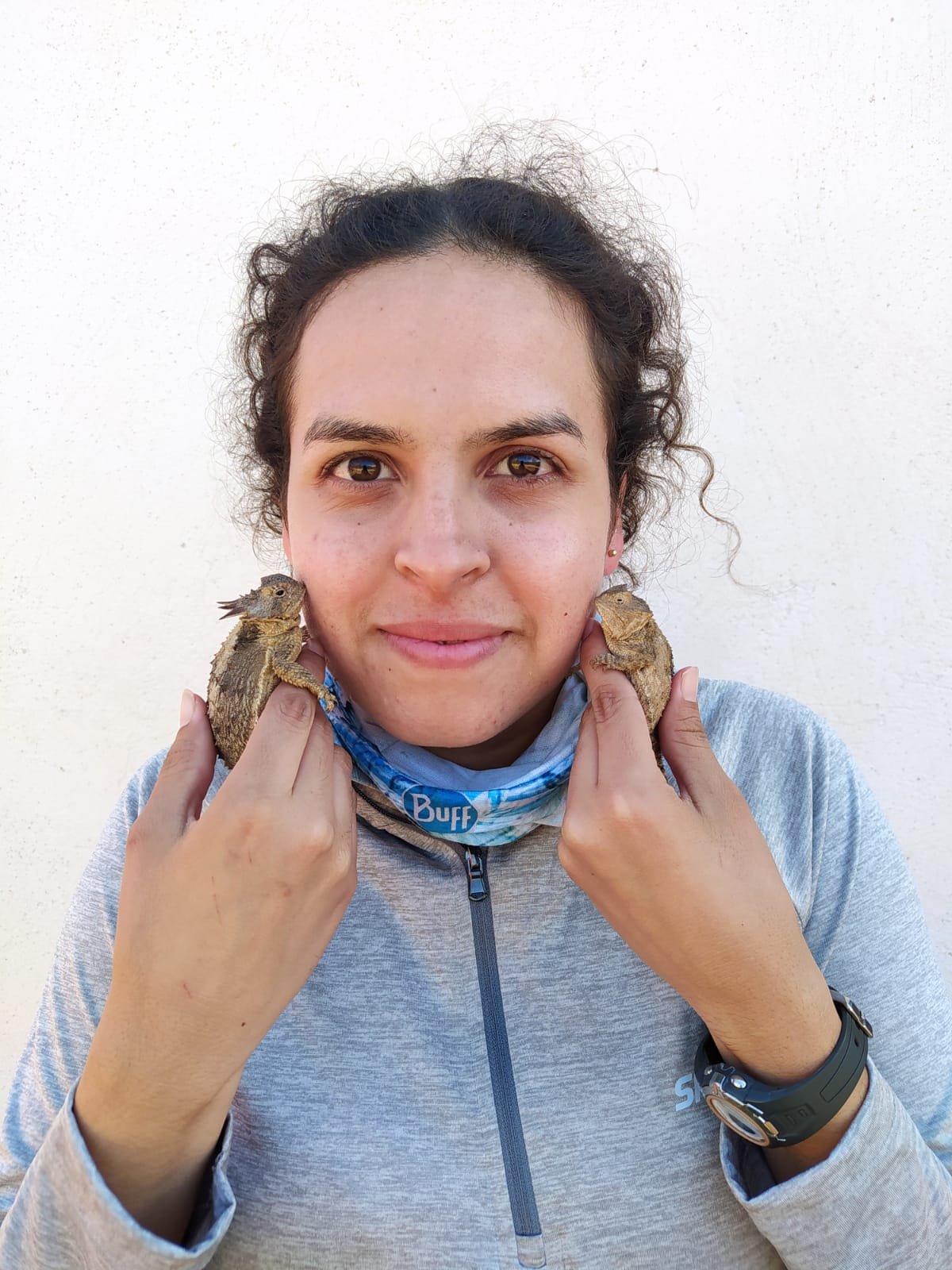
Mi amor por los camaleones inició inconscientemente cuando era una niña, siempre los veía comer en el patio de la casa de mis abuelos. Pero no fue hasta los primeros semestres de mi licenciatura en biología que empecé a conocerlos más en las sesiones del Club de Herpetología al que asistía todas las semanas, todo sobre ellos me parecía muy interesante. Y ese amor aumentó al escuchar durante un congreso la ponencia del Dr. Sherbrooke, sobre los diferentes tipos de reacciones y defensas ante los depredadores. La pasión en sus palabras y trabajo era contagiosa, y funcionó conmigo. Desde entonces me he enfocado en este género de lagartijas, y haber seguido este camino me alegra muchísimo.
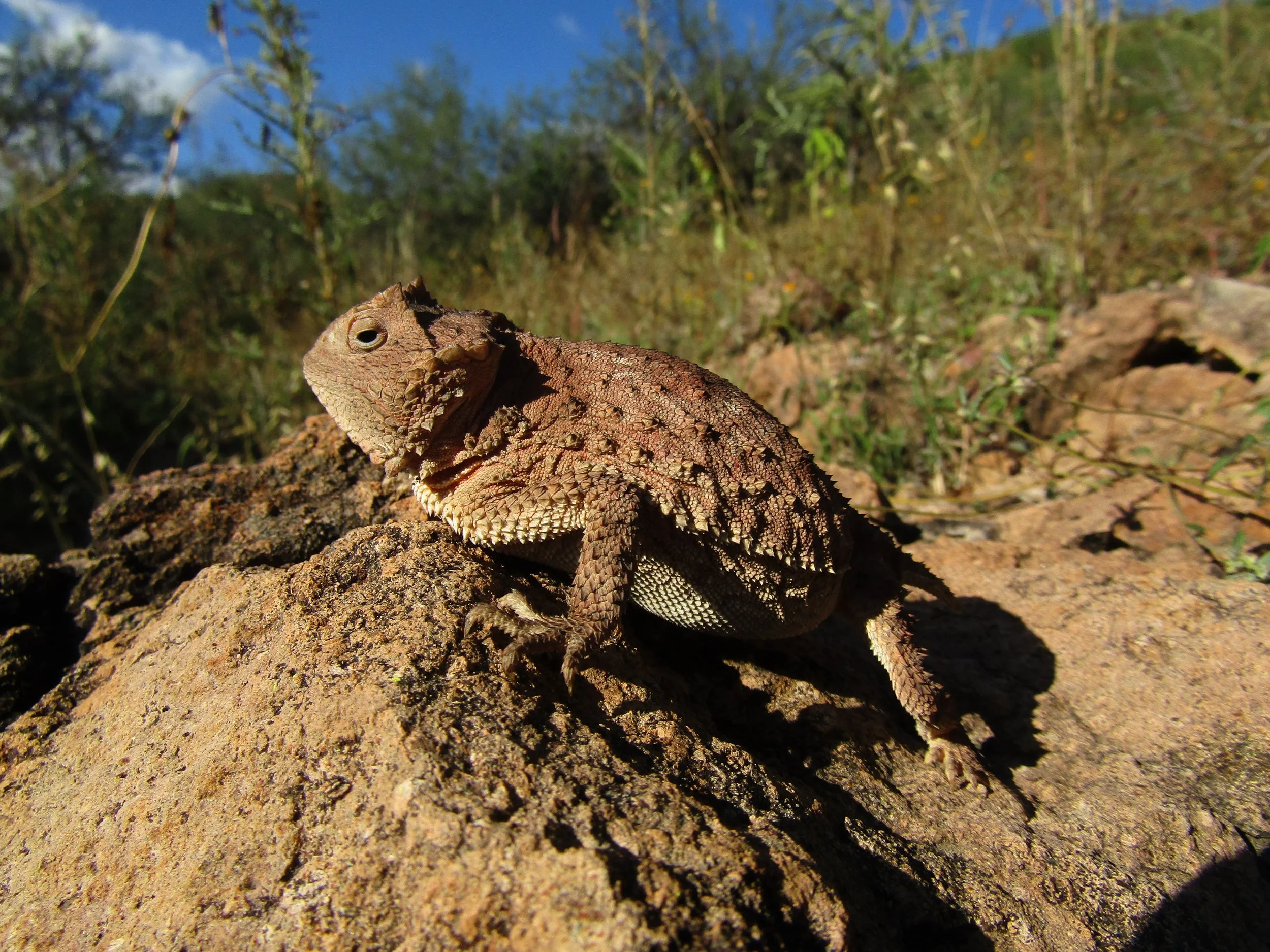
Después de dos años muy extraños, en una pandemia, confinados a nuestras casas, reencontrarme con colegas herpetólogos, viejos y nuevos amigos para estudiar mi especie favorita en un sitio hermoso alejado de la civilización, sin señal de teléfono, fuera de la rutina y las preocupaciones cotidianas, fue muy refrescante e inspirador. El Camaleón de roca (Phrynosoma ditmarsi) ha sido un misterio para la ciencia desde su descubrimiento. Esta especie endémica a mi estado Sonora en México es tan rara de ver que, cuando encuentras un individuo, es un sentimiento único. De cierta forma, el amor que siento por los camaleones y el orgullo de ser Sonorense, me hace sentir que tengo un deber con esta especie, conocer más sobre ella es vital para poder protegerla, y me siento afortunada de ser parte de esta investigación.
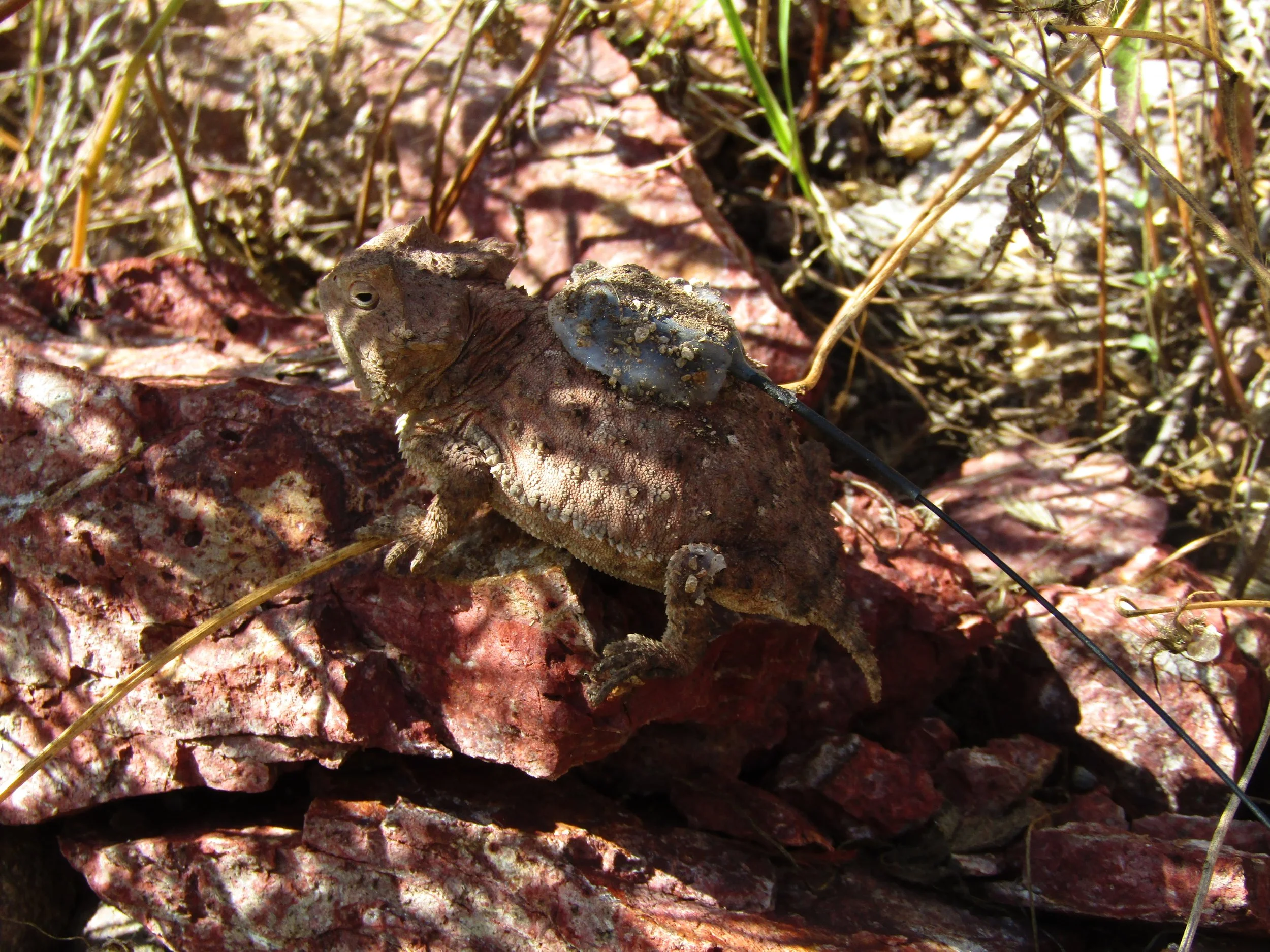
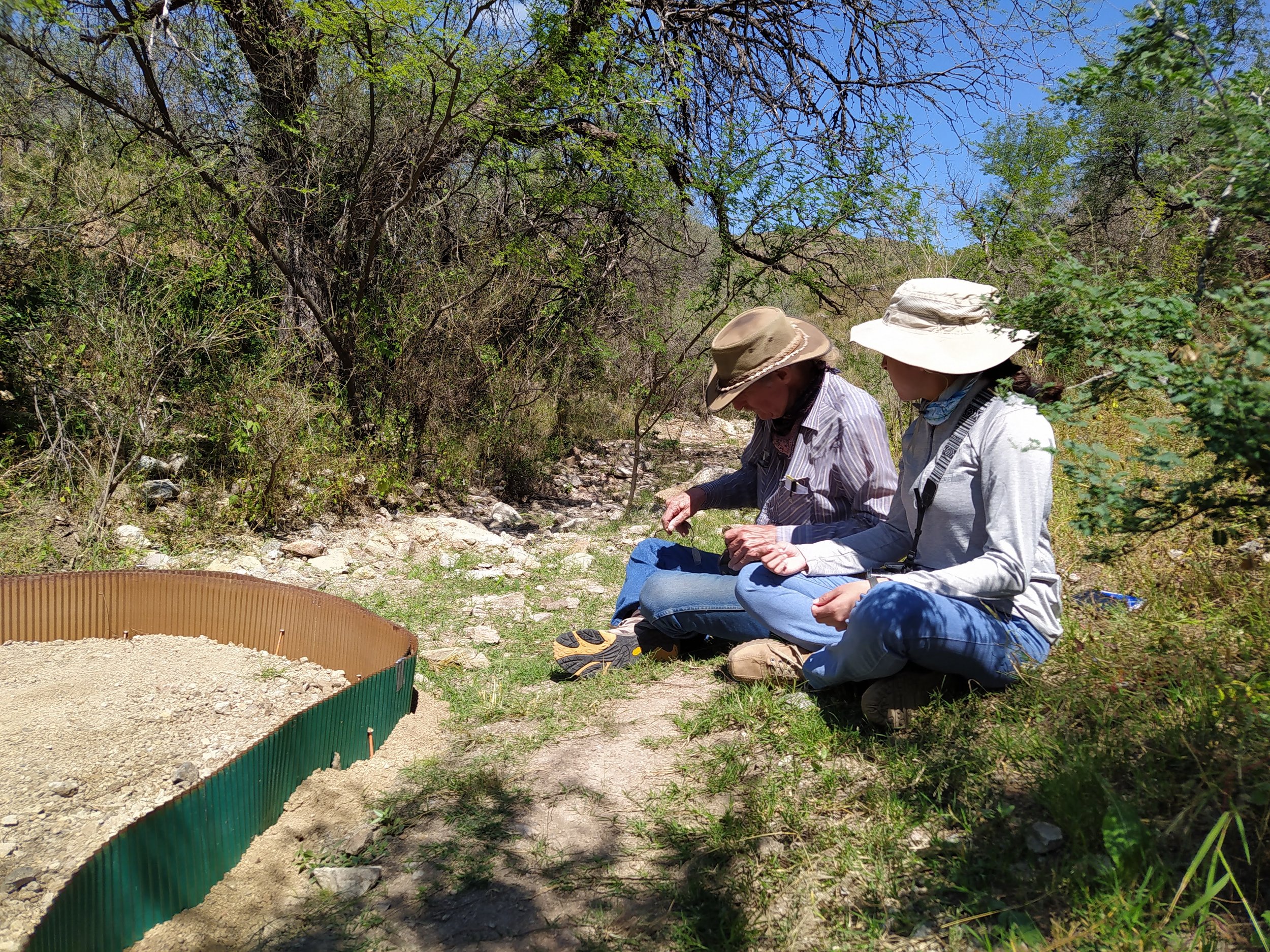
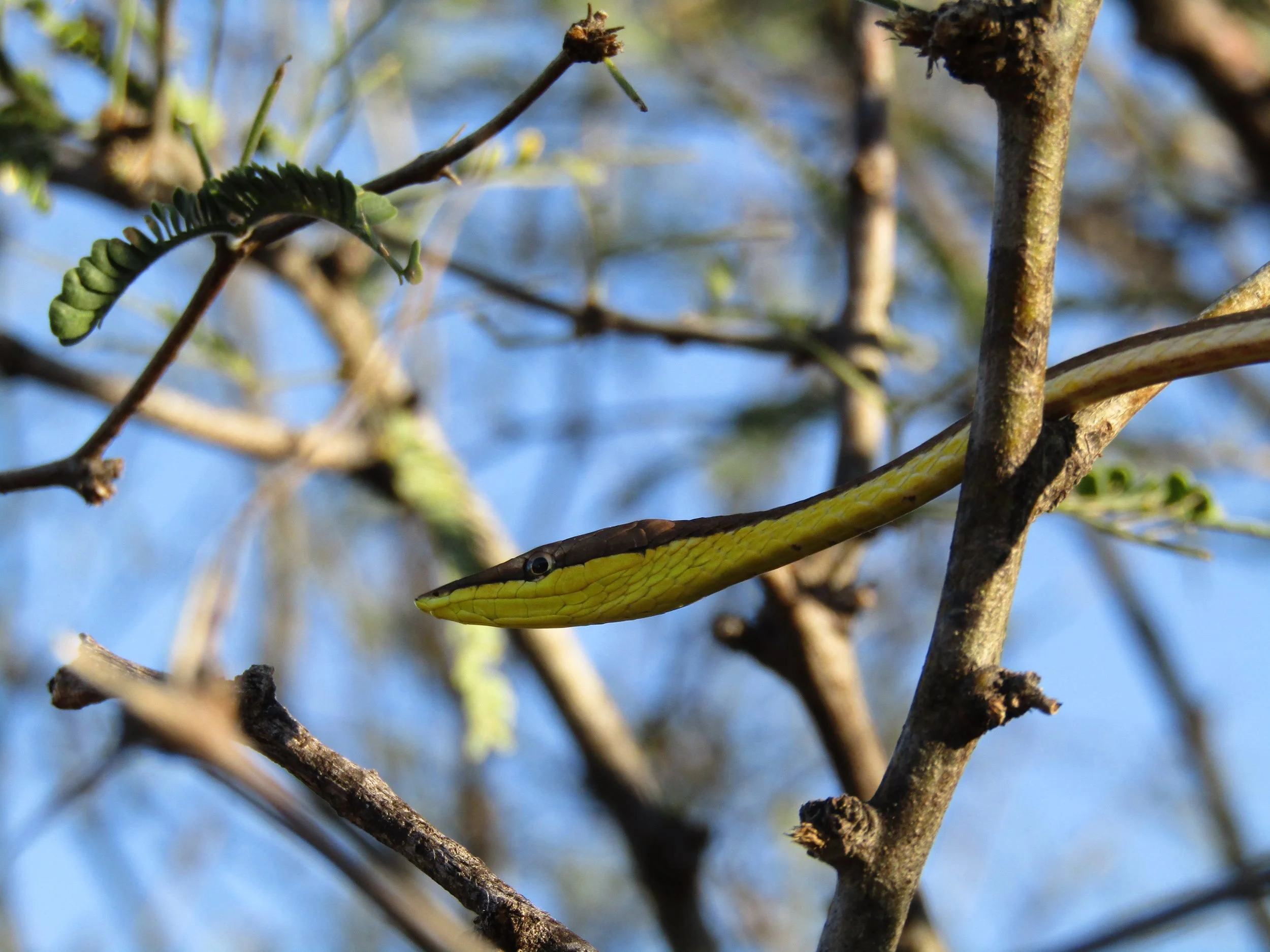
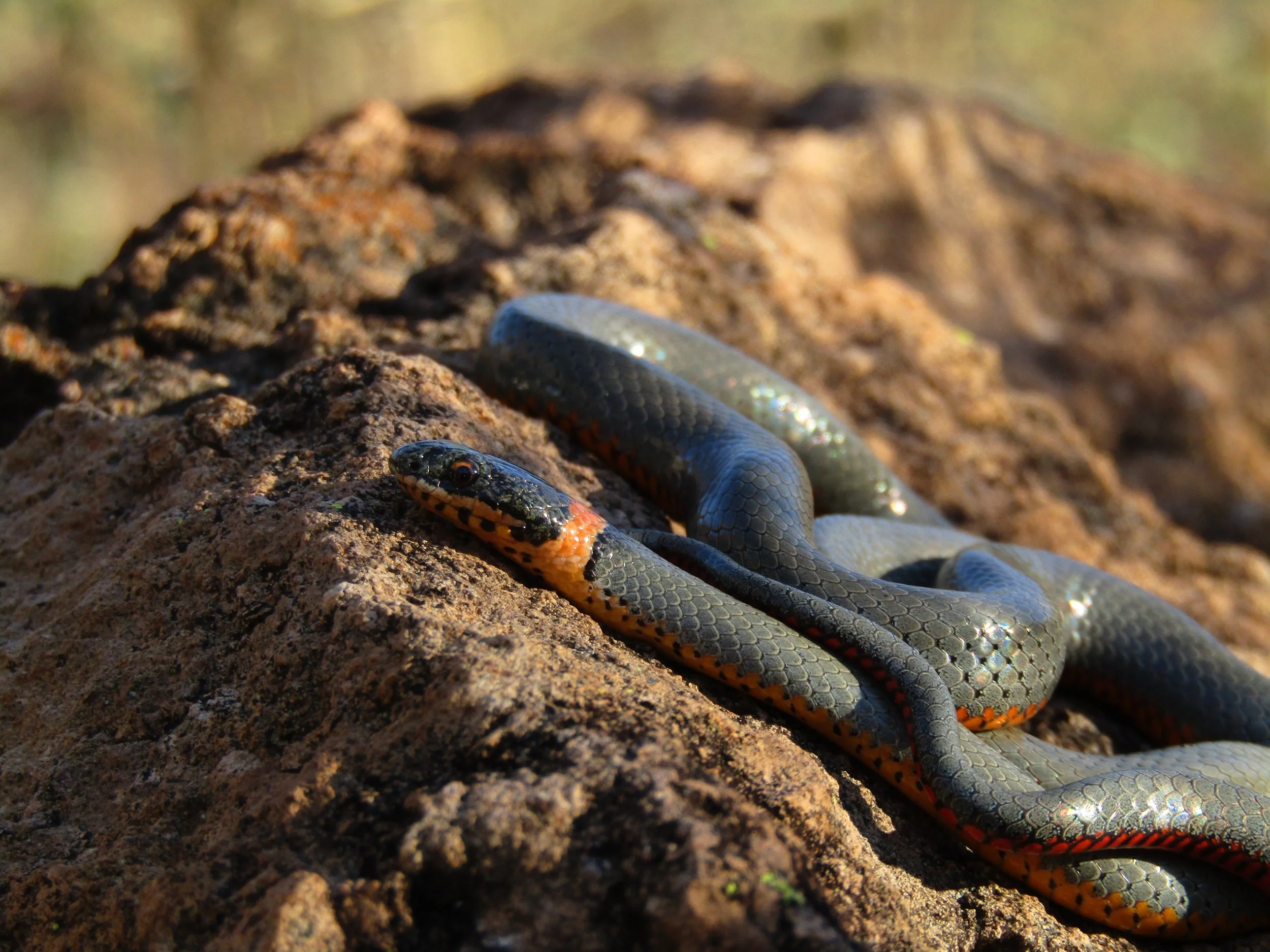
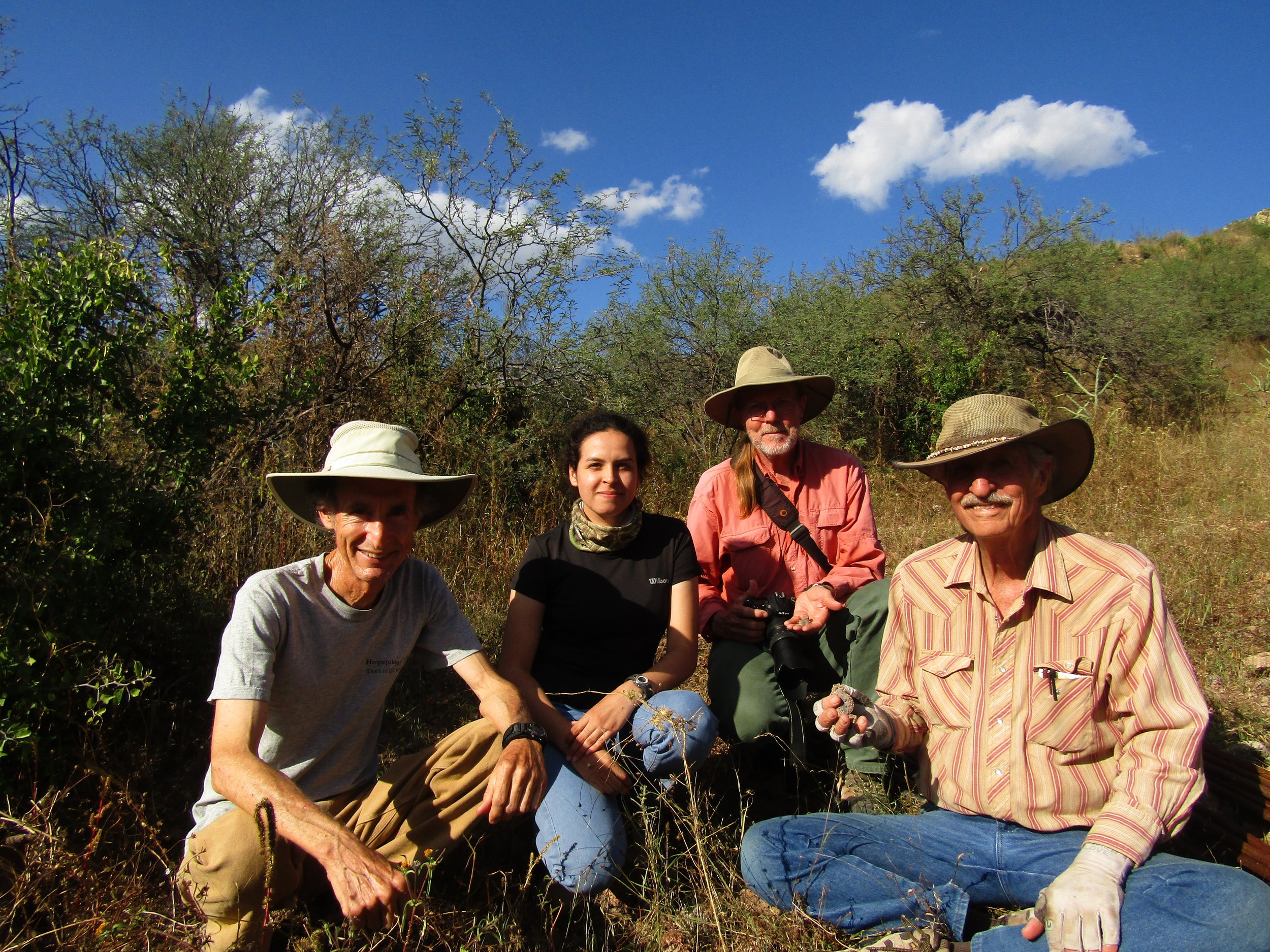
En una mañana soleada el primer día de expedición, todos los participantes nos separamos en grupos pequeños entusiasmados por salir a buscar a los camaleones a distintos sitios alrededor del campamento. No sin antes hacer una pequeña “apuesta”, de cuantos camaleones creíamos cada quien que nos encontraríamos en ese viaje. Los números calculados no fueron muy altos, sin embargo, el número final fue algo que nos sorprendió a todos. A lo largo de nueve días, nos maravillamos con todo lo que pudimos aprender de esta especie. Entusiastas de todas las publicaciones que se podrán realizar en el futuro. También pudimos observar 35 especies de reptiles y anfibios, siendo este uno de los viajes más productivos para las especies de herpetofauna, junto con las Madrean Discovery Expeditions de Sierra Los Locos y Mesa Tres Ríos. Estas expediciones biológicas organizadas por Greater Good Charities, tienen como principal objetivo registrar la alta biodiversidad de las islas del cielo sonorenses. Sin embargo, una de las cosas que más se queda conmigo de este viaje, es la comunidad que tenemos y la armonía que se siente al convivir con estas personas Las pláticas, las historias y experiencias compartidas, las bromas y el compartir el mismo sentimiento de amor por estos camaleones con el resto de los participantes, es lo que más me motiva y lo que más disfruté de este viaje.
A pesar de que las generaciones de biólogos anteriores y nuevas tienen distintos estilos de trabajo, el que todos hayamos llegado a un acuerdo en cuanto a los siguientes pasos de esta investigación, demuestra que dar prioridad a lo que realmente importa y no aferrarse a una sola opinión, es necesario para un buen trabajo en equipo y lograr cosas más grandes.
Al final quedamos con más preguntas que respuestas, ¡pero eso es lo más emocionante! Hay mucho trabajo por venir, mucho por conocer, para poder proteger y conservar esta especie única en el mundo. Añadir a esta especie a la lista de especies protegidas por la Norma Oficial Mexicana 059, es una de las prioridades, ya que una de sus principales amenazas es la minería. Su distribución se encuentra en unas de las regiones más ricas en minerales del estado, por lo que, en el futuro cercano, la mayor parte de su hábitat podría ser destruido.
Desde hace algunos años esta especie me ha obsesionado, y estudiarla al lado de grandes herpetólogos, es algo que nunca pensé vivir. Sin duda, este ha sido uno de los mejores viajes de mi vida, lleno de recuerdos que se quedarán hasta el último día de mi vida…
My love for horned lizards started unconsciously when I was a little girl, I always saw them eat in the yard of my grandparents' house. But it was not until the first semesters that I began to get to know them more in the sessions of the Herpetology Club that I attended every week, everything about them seemed very interesting to me. And that love increased when listening to the presentation of Dr. Sherbrooke, on the different types of reactions and defenses against predators. The passion in his words and work was contagious, and it worked for me. Since then I have focused on this genus of lizards, and having followed this path makes me very happy.
After two very strange years, in a global pandemic, confined to our homes, I met again with fellow herpetologists, old and new friends to study my favorite species in a beautiful place far from civilization, without a telephone signal, out of the routine and everyday worries, it was very refreshing and inspiring. The Rock Horned Lizard (Phrynosoma ditmarsi) has been a mystery to science since its discovery. This endemic species to my state of Sonora in Mexico is so rare to see that, when you find an individual, it is a unique feeling. In a way, the love I feel for horned lizards and the pride of being a Sonoran, makes me feel that I have a duty to this species, knowing more about it is vital in order to protect it, and I feel fortunate to be part of this research.
On a sunny morning on the first day of the expedition, all the participants broke into small groups excited to go out to look for horned lizards at different sites around the camp. Not without first making a small “bet”, of how many horned lizards did each of us believe that we would meet on that trip. The calculated numbers weren't very high, however, the final number was something that surprised us all. Over the course of nine days, we marveled at what we were able to learn from this species. Enthusiasts of all the publications that you will be able to make in the future. We were also able to observe 35 species of reptiles and amphibians, this being one of the most productive trips for herpetofauna species, along with the Madrean Discovery Expeditions of Sierra Los Locos and Mesa Tres Ríos. These biological expeditions organized by GreaterGood Charities, have as the main objective to register the high biodiversity of the Sonoran sky islands. However, one of the things that stays with me the most about this trip is the community we have and the harmony that is felt when living with these people. The talks, the stories, and shared experiences, the jokes, and sharing the same feeling of love for these horned lizards with the rest of the participants, is what motivates me the most and what I enjoyed the most about this trip.
Although older and new generations of biologists have different working styles, the fact that we have all agreed on the next steps in this research shows that prioritizing what really matters and not sticking to just one opinion, it’s necessary for good teamwork and achieving greater things.
In the end, we are left with more questions than answers, but that's the most exciting thing! There is a lot of work to come, a lot to know, in order to protect and conserve this unique species in the world. Adding this species to the list of species protected by the Official Mexican Standard 059, is one of the priorities since one of its main threats is mining, its distribution is found in one of the richest regions in minerals in the state, so, in the near future, most of their habitat could be destroyed.
For some years this species has obsessed me, and studying it alongside great herpetologists is something I never thought I would live. Without a doubt, this has been one of the best trips of my life, full of memories that will remain until the last day of my life ...